
A celebration of life turns goodbye into a gathering filled with stories, music, prayer, and love.
Losing someone you love leaves a quiet space that words rarely fill. Some families want a farewell that feels gentle and personal instead of heavy and formal. A celebration of life gives them that choice.
It brings people together to remember how a person lived, what they loved, and the difference they made. There is room for tears, room for laughter, and room for prayer or silence, too.
This complete guide covers the celebration of life meaning, how it differs from a funeral, and what happens at one. You will also find ready-to-use celebration of life ideas, invitation wording, tribute openers, a sample program, and a full step-by-step plan.
What Is a Celebration of Life?
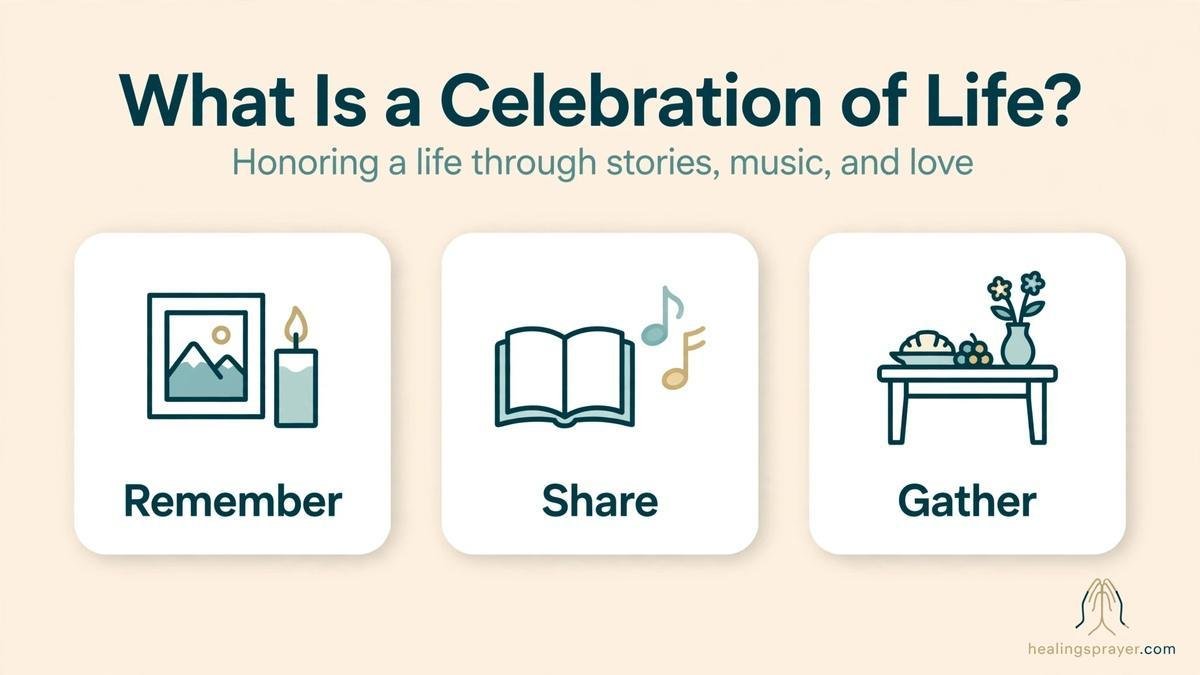
A celebration of life is a gathering that honors a person who has died by remembering how they lived, instead of focusing only on the loss. Family and friends share stories, music, food, prayers, and memories to recognize the person’s life and the impact they had on others.
The gathering can be small or large, formal or relaxed, and held in almost any place. There is no required script, no fixed length, and no rule about who must speak. That freedom is exactly why so many families now choose a celebration of life over a purely traditional service.
Celebration of Life Meaning
The celebration of life meaning comes down to gratitude. It says, “We are sad you are gone, and we are thankful for the time we had with you.”
If you have ever searched “what does celebration of life mean” or “what’s a celebration of life,” the simple answer is this: it is a way to hold grief and appreciation in the same room. Sadness is not hidden or pushed away. It shares space with warmth, humor, and love.
The word “celebration” does not mean a party or forced happiness. It means recognizing something valuable. In this case, the value is a whole life, with its highs, lows, quirks, and kindnesses.
A good celebration of life feels like the person it honors. If they were quiet and thoughtful, the gathering may be calm and simple. If they were loud and funny, the room may be too.
Celebration of Life Event, Ceremony, and Service
People use several names for the same idea. The label usually reflects how formal the gathering is:
- Celebration of life event: a casual gathering at a home, park, beach, or restaurant
- Celebration of life ceremony: a structured program with speeches, readings, prayers, or music
- Celebration of life service: often held in a funeral home, place of worship, or community hall, and led by a celebrant, officiant, or family member
Whichever name you choose, the purpose stays the same: to honor the person in a way that feels true to them. Many families mix these styles, for example a short formal ceremony followed by a relaxed reception.
Who a Celebration of Life Is For
A celebration of life can work in many situations. Here are the most common ones:
- After a long illness, when the family has had time to think about what they want
- After a sudden loss, when everyone needs more time before gathering
- When relatives live far away, and travel plans need weeks to arrange
- When the person asked for no traditional funeral, and wanted something lighter
- After cremation or a private burial, as a public gathering afterward
- On an anniversary or birthday, months or years after the death
There is no wrong time. Some families hold one within days, and others wait until the first wave of grief has softened.
Why a Celebration of Life Matters
Gathering to remember someone helps people process loss together. It gives everyone a shared place to say the person’s name out loud, tell stories, and feel supported by others who knew them.
Grief does not follow a straight path, and a celebration of life respects that. It gives structure without stiffness, which many families find easier to handle than a rigid service.
The Emotional Benefits of a Celebration of Life
Grief researchers describe an idea called continuing bonds, which says that staying connected to someone through memories and rituals can be a healthy part of grieving. A celebration of life supports this by turning memory into something shared and visible.
The Dual Process Model of coping, developed by Margaret Stroebe and Henk Schut, also explains that people move back and forth between facing the loss and taking breaks from it. A celebration of life fits that pattern well, because guests can cry during a tribute and laugh during a story in the same afternoon.
Other emotional benefits include:
- Shared comfort: seeing that others miss the person too can ease loneliness
- New stories: guests often share memories the family has never heard
- A sense of closure: a gathering marks a clear point in the grieving process
- Permission to feel everything: both sadness and joy are welcome
If someone in your family is struggling badly after a loss, a grief counselor or a local hospice bereavement service can offer extra support.
Also Read : Powerful Prayers for Strength for Every Hard Season of Life
The Practical Benefits of a Celebration of Life
A celebration of life also solves several practical problems:
- Flexible timing: you can wait until relatives can travel
- Flexible cost: you decide what to spend, from very little to a larger event
- Flexible location: homes, parks, halls, and beaches are all options
- Flexible format: you can include faith elements, secular elements, or both
- Easy personalization: you can build the day around the person’s favorite things
This flexibility often reduces stress for the people planning it, and that matters when everyone is already tired from grief.
Celebration of Life vs. Funeral
A funeral and a celebration of life can both honor someone, but they feel different. Here are the main contrasts:
- Tone: funerals are usually solemn and traditional. A celebration of life is warm, personal, and often uplifting.
- Timing: funerals are held within days. A celebration of life can happen days, weeks, or months later.
- Location: funerals are held at a funeral home, place of worship, or cemetery. A celebration of life can be held anywhere meaningful.
- Format: funerals follow set rituals. A celebration of life is flexible and fully customizable.
- Body present: funerals often include the body or casket. A celebration of life usually does not, though it may include an urn or a photo.
- Dress code: funerals usually call for dark clothing. A celebration of life may be relaxed, colorful, or themed.
You do not have to choose one or the other. Many families hold a private funeral or burial first, then plan a larger celebration of life later, once relatives have had time to travel and prepare.
If your faith tradition requires specific funeral rites, you can honor those first and hold the celebration of life afterward. The two work well together.
Celebration of Life Ideas
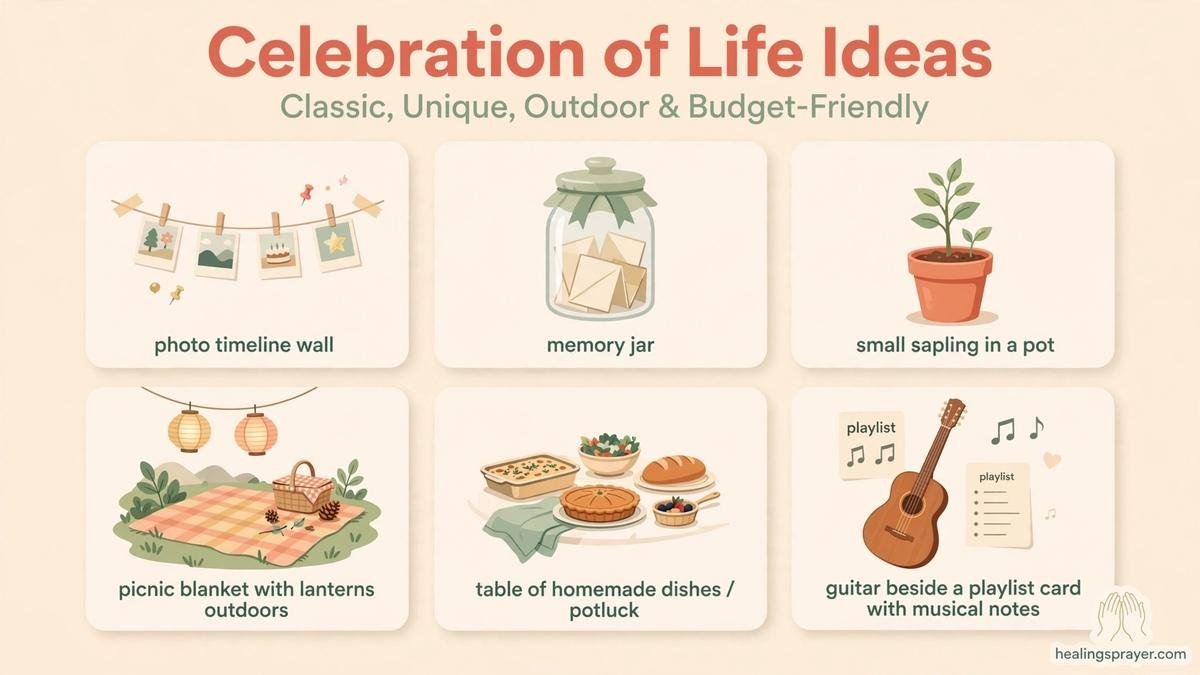
The best celebration of life ideas reflect the personality of the person you are honoring. The lists below give you ten ready-to-use ideas in each category. Pick what fits, and change whatever does not.
Classic Celebration of Life Ideas
- Memory sharing circle: guests take turns telling a short story or favorite moment about the person.
- Photo timeline wall: display pictures from childhood to recent years in order, so guests can follow the whole life.
- Memory jar: guests write a memory on a slip of paper, and the family keeps the jar afterward.
- Favorite-song playlist: play the songs the person loved as guests arrive and settle in.
- Candle lighting: each guest lights a candle and says one word that describes the person.
- Guestbook with prompts: add lines like “My favorite memory is…” so guests know what to write.
- Video tribute: combine short clips and photos into a slideshow of a few minutes.
- Recipe cards: print their signature recipe for guests to take home.
- Memorial table: arrange photos, keepsakes, and flowers on one table as a quiet focal point.
- Moment of thanks: invite guests to name one thing they are grateful for because of the person.
Unique Celebration of Life Ideas
These unique celebration of life ideas work best when at least one detail makes guests say, “That is exactly like them.”
- Themed gathering: build the event around a passion such as cooking, cricket, travel, music, or vintage cars.
- Their favorite place: hold it at the lake, café, garden, or field they loved most.
- Memorial tree or garden: plant a tree and invite guests to add a flower or herb.
- Charity drive: collect donations for a cause they cared about and share the total afterward.
- Story quilt: each guest decorates a fabric square, and the family sews them together later.
- Tribute performance: friends or relatives play, sing, or recite something in their honor.
- Letter box: guests write letters to the person and seal them in a memory box.
- Hobby showcase: set up a table with their tools, books, artwork, or collection.
- Favorite-things toast: everyone names one of the person’s favorite things before raising a glass.
- Pay-it-forward acts: guests commit to one small act of kindness in the person’s name.
Outdoor Ideas for a Celebration of Life
- Garden party: set tables among flowers, with the person’s favorite blooms as centerpieces.
- Beach gathering: share stories near the water and finish with a sunset toast.
- Park picnic: ask everyone to bring a blanket and a dish the person enjoyed.
- Group hike: walk to a viewpoint they loved and pause for a few words at the top.
- Bonfire evening: gather around a fire for stories and quiet music.
- Fishing or boating trip: honor them by doing the thing they enjoyed most.
- Friendly match: organize a casual game of their favorite sport.
- Stargazing night: end the evening under the sky with a moment of silence.
- Flower petal tribute: guests scatter petals in a garden or on water, where permitted.
- Morning walk and breakfast: a slow, quiet option for people who dislike large crowds.
Check local rules before releasing balloons or lanterns. Choose eco-friendly options like flower petals, bubbles, or seed paper instead.
Budget-Friendly Celebration of Life at Home
A celebration of life does not need a big budget. Meaning comes from the people and the stories, not the price tag.
- Living room story night: arrange seating in a circle and invite short stories.
- Potluck meal: each guest brings one dish, which keeps costs low and adds variety.
- DIY photo display: print photos at home and hang them with string and clips.
- Community hall or shared space: many are cheap or free to borrow for a few hours.
- Speaker playlist: a simple speaker and a curated list replace a paid band.
- Homemade decor: use flowers from the garden and candles in glass jars.
- Sticky-note memory board: guests add short notes to a poster board.
- Slideshow on a TV or projector: load photos on a laptop and let them loop.
- Tea and snacks only: a short afternoon gathering needs very little food.
- Printed program on plain paper: a one-page sheet with a photo and the schedule looks neat and costs little.
Food, Drink, and Music Ideas
- Their favorite meal: serve the dish they asked for most often.
- Signature-dish potluck: each guest brings something connected to a memory of the person.
- Favorite drink toast: raise a glass of their preferred drink, alcoholic or not.
- Dessert table: feature their sweet tooth with a cake or a spread of small treats.
- Tea and coffee bar: an easy, comforting station for longer gatherings.
- Regional or family dishes: serve food connected to their heritage or hometown.
- Live acoustic music: ask a friend or relative to play softly during the meal.
- Group sing-along: finish with a song everyone knows and the person loved.
- Instrumental background music: soft music keeps the room calm during conversation.
- Take-home treat bags: wrap a favorite cookie or sweet for guests to carry home.
Celebration of Life Ideas by Interest
Matching the event to the person’s passion makes any celebration of life feel personal.
- For a gardener: hold it in a garden and give each guest a small plant or seed packet.
- For a musician: invite friends to play, and display their instruments.
- For a cook: serve their recipes and print the best one on a card.
- For a traveler: decorate with maps and photos from their trips, and place pins on a world map.
- For a sports fan: ask guests to wear the team colors and play highlight clips.
- For a reader: set up a book table and let guests take a favorite title home.
- For an artist: display their work and provide art supplies for a shared tribute piece.
- For an animal lover: partner with a local shelter and collect donations.
- For a craftsperson: show their finished pieces and include a hands-on craft table.
- For someone deeply faithful: include readings, hymns, or prayers from their tradition.
Keepsake Ideas for Guests
- Seed packets: guests plant them and think of the person as they grow.
- Bookmarks: print a photo and a favorite quote on one side.
- Recipe cards: a small card with a favorite dish keeps the memory in the kitchen.
- Engraved stones: small smooth stones with a word like “Peace” or “Love.”
- Small candles: label them with the person’s name and dates.
- Photo magnets: a simple, low-cost reminder for the fridge.
- Playlist QR cards: guests scan the card to hear the person’s favorite songs.
- Handwritten quote cards: short lines the person often said.
- Tea or coffee tins: a blend the person enjoyed, with a small thank-you note.
- Donation cards: a card stating that a gift was made to a charity in their name.
What Do You Do at a Celebration of Life?
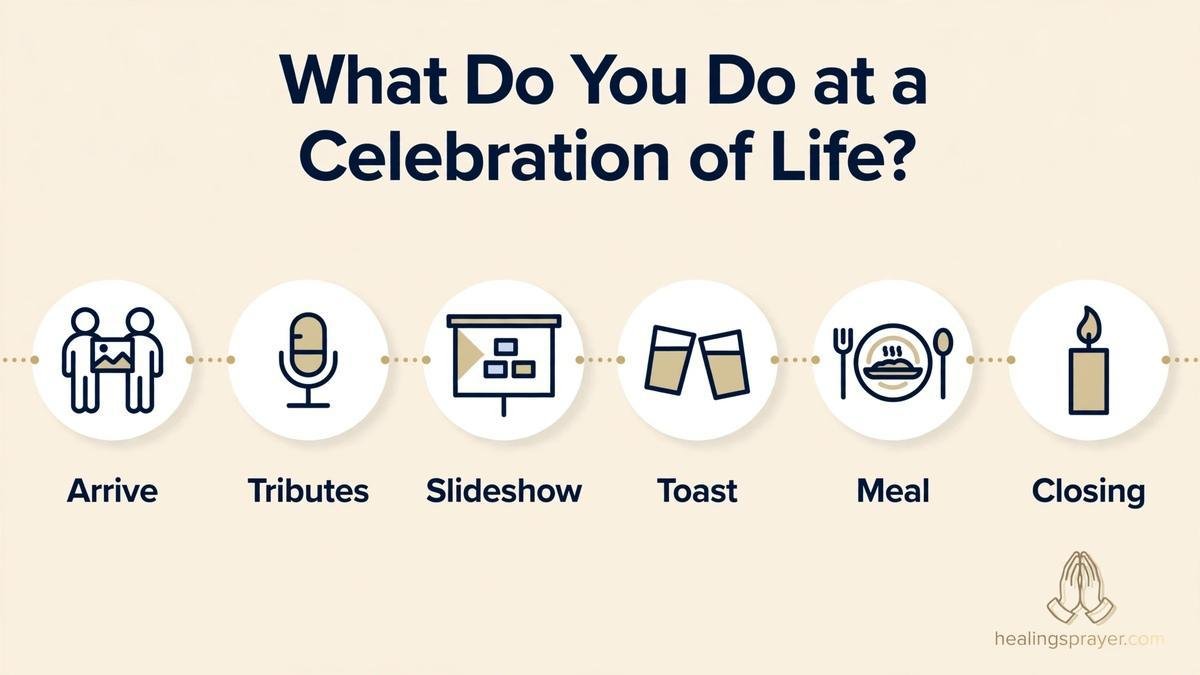
Most gatherings follow a gentle flow. Guests arrive and look at photos, the host says a few opening words, and a few people share tributes. After that, the room usually relaxes into food, music, and conversation.
There is no required sequence. You can begin with food and add speeches later, or skip formal speeches and keep the celebration of life as an open conversation. Guests are only expected to be present, listen, and share a memory if they wish.
Things to Do at a Celebration of Life
If you are looking for things to do at a celebration of life that keep guests connected and comfortable, try these:
- Photo booth: set up a backdrop with the person’s favorite props or hats.
- Memory board: invite guests to add sticky notes with short memories.
- Open-mic moment: leave a microphone free for anyone who wants to speak.
- Looping slideshow: play photos and clips quietly in the background.
- Set-time toast: pick a moment when everyone raises a glass together.
- Children’s drawing table: provide paper and crayons so younger guests can take part.
- Life trivia: create a quick quiz with fun facts about the person.
- Favorite game session: play a card game, board game, or sport they enjoyed.
- Group photo: take one photo of everyone present as a shared keepsake.
- Quiet corner: set aside a calm space with chairs and tissues for anyone who needs a break.
Sample Program for a 2.5-Hour Celebration of Life
Use this as a starting point and adjust the timing to suit your celebration of life:
- 0:00 to 0:30: Guests arrive, view photos, and sign the guestbook
- 0:30 to 0:40: Welcome and opening words from the host
- 0:40 to 1:10: Tributes from close family and friends
- 1:10 to 1:25: Slideshow or video tribute
- 1:25 to 1:35: Toast, prayer, or candle lighting
- 1:35 to 2:20: Meal, music, and open sharing
- 2:20 to 2:30: Closing thanks and a final word from the family
Prayers, Blessings, and Moments of Silence
Many families include a short prayer, blessing, or quiet moment in a celebration of life. It gives guests a pause to breathe and reflect, whatever their beliefs.
You can use your own faith tradition’s words, or use simple lines like these. Replace the brackets with the person’s name:
- “We give thanks for the gift of [Name]’s life.”
- “May [Name] rest in peace and be surrounded by light.”
- “We are grateful for every moment we shared with [Name].”
- “May comfort and strength be with everyone who misses [Name].”
- “Let us take a quiet minute to remember [Name] in our own way.”
- “May the love [Name] gave us continue to guide us.”
- “We ask for healing for the hearts gathered here today.”
- “Thank you for the kindness [Name] showed to so many.”
- “May we carry [Name]’s memory forward with love and gratitude.”
- “Please bow your heads or simply sit quietly for a moment of remembrance.”
A one-minute pause is often enough. Let guests decide whether to pray, reflect, or simply sit in silence.
How to Plan a Celebration of Life (Step by Step)
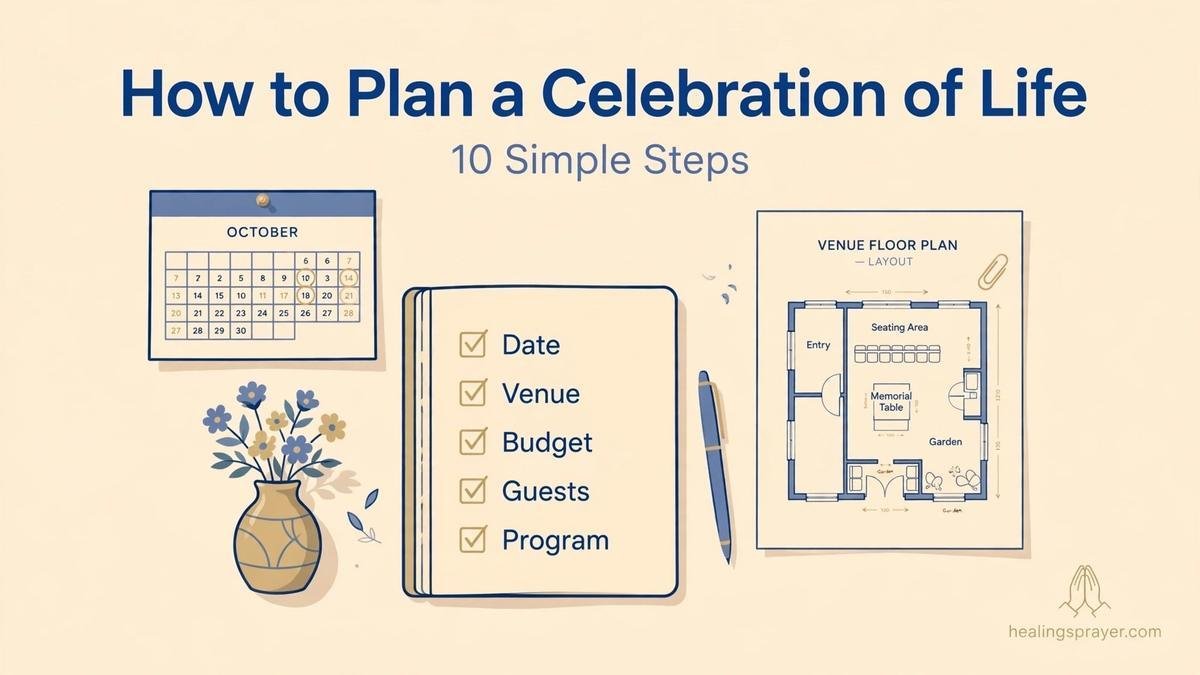
Planning while you grieve can feel like too much. Splitting it into steps makes it easier to handle. Here is a simple plan for a celebration of life:
- Choose a host team. Ask two or three people to help. One person can handle the venue, another the food, and another the program.
- Set a date. There is no deadline. A few weeks out often gives travelers time to book, and avoiding major holidays helps attendance.
- Set a budget. Decide what you are comfortable spending, then divide it between venue, food, decor, and extras. Ask relatives if they can cover one item each.
- Pick a venue. Match the space to the guest count and the person’s personality. Check seating, parking, accessibility, and restrooms.
- Build the guest list and send invitations. A group message or email works for informal events. Printed cards suit formal ones. Ask for replies so you can plan food.
- Plan the program. Choose who will speak, what music to play, and how long the event will last. Keep tributes to three to five minutes each.
- Arrange food and drink. Decide between catering, a potluck, or a simple tea. Ask guests about allergies or restrictions when they reply.
- Collect photos and keepsakes. Ask relatives to send pictures early. A slideshow is often the emotional center of the day.
- Add personal and faith elements. Use the person’s favorite color, food, song, or hobby. Include a prayer or moment of silence if it suits the family.
- Assign day-of roles. Choose someone to greet guests, someone to run the slideshow, and someone to handle food, so the closest family members can stay present.
Then leave room for feelings. Some guests will laugh, some will cry, and many will do both.
Four-Week Planning Timeline
If you have about a month, this schedule keeps your celebration of life on track:
- Week 4 (four weeks out): Choose the host team, set the date, decide the budget, and book the venue
- Week 3: Send invitations, collect photos, and decide on food and music
- Week 2: Confirm speakers, finalize the program, and order any printed materials
- Week 1: Confirm the guest count, prepare the slideshow, and gather keepsakes
- Final 2 days: Set up the venue, test the audio and screen, and share roles with helpers
- Event day: Arrive early, greet guests, and follow the program with flexibility
If you have less time, keep the plan simple. A small, heartfelt celebration of life is far better than an over-planned one.
Rough Budget Guide
Every family’s budget is different, but this rough split can help you start:
- Venue: about 30%
- Food and drink: about 35%
- Decor and printing: about 15%
- Music and technology: about 10%
- Extras and keepsakes: about 10%
If the venue is free, such as a home or garden, move that share into food or keepsakes. Treat these figures as a planning guide, not a rule.
Celebration of Life Invitation Wording
Keep invitations short, warm, and clear. Replace the brackets with your details. Here is ready-to-use celebration of life invitation wording:
- “Please join us for a celebration of life honoring [Name]. Come share stories, laughter, and memories.”
- “We are gathering to celebrate the life of [Name]. Your presence would mean a great deal to the family.”
- “Join us as we remember [Name] with music, food, and stories. Date: [ ] Time: [ ] Place: [ ].”
- “[Name] loved bright colors. Please wear something cheerful as we celebrate their life together.”
- “Please bring a favorite photo or memory of [Name] to share at the gathering.”
- “In lieu of flowers, the family asks for donations to [Charity], a cause [Name] cared about.”
- “You are invited to a casual celebration of life for [Name]. Come as you are and stay as long as you like.”
- “Kindly reply by [Date] so we can plan food and seating. We hope to see you there.”
- “We will be sharing a meal after the service. Please let us know about any dietary needs.”
- “If you cannot attend in person, join us online at [Link] to remember [Name] with us.”
You can also add a short line about dress, parking, or accessibility so guests feel prepared.
Opening Lines for a Tribute or Speech
A speech does not need to be perfect. These openers help nervous speakers begin at a celebration of life:
- “Thank you all for being here to remember [Name].”
- “[Name] had a way of making everyone feel welcome, and I want to share what that meant to me.”
- “I have known [Name] for [number] years, and this is what I will always carry with me.”
- “If [Name] were here, they would tell us to eat, laugh, and stay a while.”
- “Today is about the life [Name] lived and the people they loved.”
- “I would like to share three things I learned from [Name].”
- “Many of us have a favorite memory of [Name]. Here is mine.”
- “Words cannot cover everything [Name] meant to us, but I will try to share a little.”
- “[Name] was known for many things, but most of all for their kindness.”
- “Before I begin, I would like to thank the family for letting me speak.”
Also Read : Christmas Gift Ideas for Kids That Are Fun, Meaningful & Faith-Centered
Tips for a short tribute:
- Keep it to three to five minutes
- Write it out in advance, and practice once aloud
- Choose one or two specific memories instead of a long list
- Use notes on a card if you feel nervous
- End with a simple thank-you or a favorite saying of the person
Virtual and Hybrid Celebration of Life
Many families now include guests who cannot travel. A virtual celebration of life or a hybrid event (in person plus online) makes sure no one is left out.
Most video platforms work well. Here is how to set it up:
- Pick a simple platform that guests already know how to use
- Send the link early with clear start times, including time zones
- Assign a moderator to mute microphones and call on speakers
- Test audio and camera before guests arrive
- Record the event, if the family agrees, so absent relatives can watch later
- Use a shared photo album so guests can upload pictures before or after
For hybrid events, place a laptop or screen near the front so online guests can see and hear the speakers. Ask one helper to watch the chat and read out messages.
A virtual celebration of life can also include a shared prayer, a group toast, or a chat wall of memories, which keeps remote guests involved.
Guest Etiquette at a Celebration of Life
If you are attending a celebration of life, a few simple habits help the family:
- Reply to the invitation so the hosts can plan
- Follow the dress note, or choose smart casual if none is given
- Arrive on time and silence your phone
- Keep your story short and kind, especially in group settings
- Ask before taking photos of other guests or the family
- Offer help with setup, food, or cleanup if the family accepts
- Follow up later with a message, since support matters most in the weeks after the event
A short, sincere sentence such as “I am so sorry for your loss, and I am glad to be here” is enough when you greet the family.
Including Children and Older Relatives
A thoughtful celebration of life makes room for guests of every age.
For children:
- Explain in simple words what the gathering is for
- Provide a drawing or craft table
- Let them take part in a small task, such as lighting a candle with an adult
- Arrange a quiet space where they can rest
For older relatives:
- Provide comfortable seating close to the front
- Keep walking distances short and the venue accessible
- Use a microphone so everyone can hear
- Plan shorter breaks and avoid a long, tiring schedule
Common Mistakes to Avoid
Even well-planned gatherings can run into problems. Watch out for these when organizing a celebration of life:
- Doing everything alone. Share tasks early, since planning under stress leads to burnout.
- Making the schedule too full. Leave gaps for conversation and quiet time.
- Letting speeches run long. Set a time limit and share it with speakers ahead of time.
- Ignoring dietary needs. Ask guests about allergies or restrictions when they reply.
- Skipping the small children. Give them something simple to do so parents can stay present.
- Copying a template with no personal touch. Add at least two details that reflect the person.
- Forgetting the weather plan. For outdoor events, arrange a tent or indoor backup.
- Overspending out of guilt. A simple gathering can be just as meaningful as an expensive one.
- Skipping a sound check. Test the microphone and slideshow before guests arrive.
- Forgetting to care for yourself. Eat, drink water, and take a moment alone if you need it.
Celebration of Life Formats at a Glance
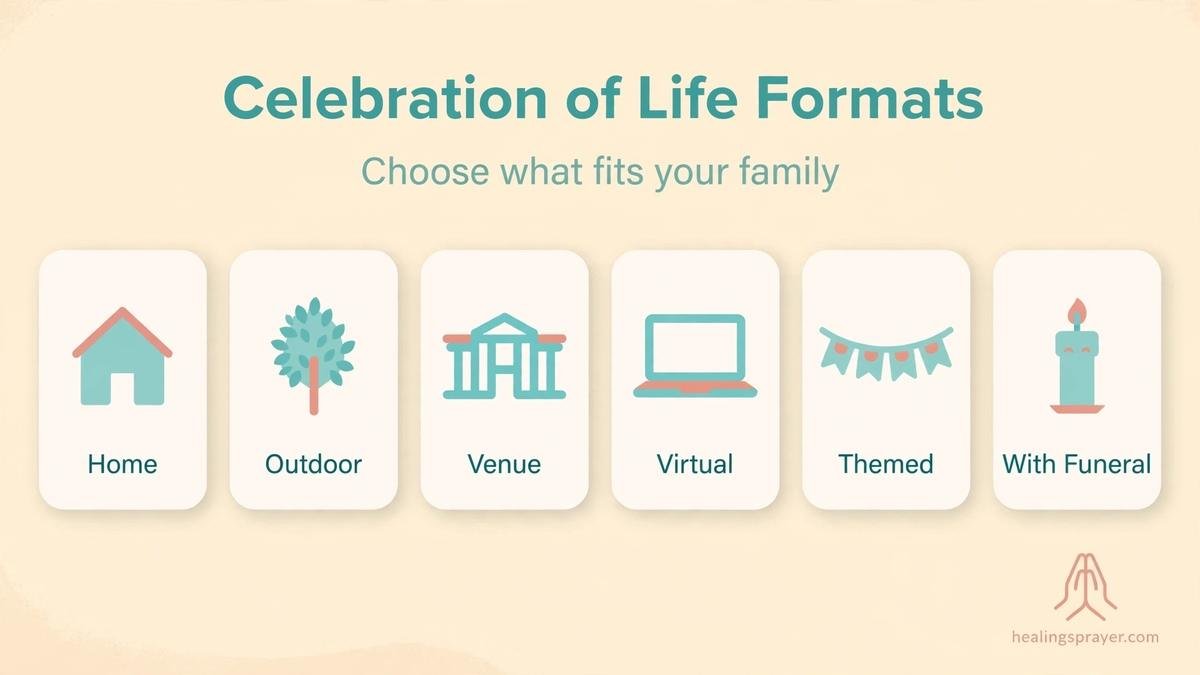
| Format | Best For | Typical Length | Example Idea |
|---|---|---|---|
| Home gathering | Small groups, tight budgets | 2 to 3 hours | Living room story night with a photo timeline |
| Outdoor event | Nature lovers, larger groups | 2 to 4 hours | Park picnic with a sunset toast |
| Venue-based service | Formal tributes, bigger crowds | 1.5 to 2.5 hours | Hall service with a slideshow and tribute speeches |
| Virtual or hybrid | Family spread across countries | 1 to 2 hours | Video call with a shared online photo album |
| Themed event | Personalities with clear passions | 2 to 3 hours | Garden party for a lifelong gardener |
| With a funeral | Families wanting one combined event | 2 to 3 hours | Burial followed by a reception with stories and food |
Frequently Asked Questions
What is a celebration of life?
A celebration of life is a gathering that honors someone who has died by remembering their life through stories, music, and shared time. It focuses on how they lived, not only on the loss.
What does celebration of life mean?
It means remembering and appreciating the life a person lived. It highlights gratitude and connection while still making space for sadness.
What is the difference between a funeral and a celebration of life?
A funeral is usually a traditional, solemn service held soon after death. A celebration of life is more flexible, personal, and often more uplifting, and it can be held at any time and place.
What do you do at a celebration of life?
Guests share memories, listen to tributes, watch photo slideshows, enjoy food and music, and support one another. Some events add a toast, a candle lighting, a prayer, or a memory board.
Can you have a celebration of life without a funeral?
Yes. Many families choose a celebration of life instead of a funeral, and others hold both.
How long after death is a celebration of life held?
There is no set rule. Some are held within a week, while others happen weeks or months later so people can travel.
How long should a celebration of life last?
Usually two to three hours. Shorter works well for small groups, and longer suits outdoor or all-day gatherings.
What do you wear to a celebration of life?
Follow the invitation. If none is given, smart casual or muted colors are safe, while some families request bright colors or a theme.
Who pays for a celebration of life?
Usually the family. Friends and relatives often contribute food, decor, or venue costs, and some families ask for donations to a charity.
Can a celebration of life include prayer?
Yes. Many families include a short prayer, blessing, or moment of silence, and you can use words from your own tradition or simple non-religious lines.
Final Thoughts on Planning a Celebration of Life
A celebration of life is a gentle, meaningful way to honor someone you love. There is no single correct format, so you can shape it around the person’s personality, your budget, and the people who matter most.
Use the ideas, invitation wording, tribute openers, and step-by-step plan above as a starting point. Add a few personal details, leave space for both tears and laughter, and let the stories carry the day.
Whether you choose a quiet gathering at home, an outdoor event, or a formal service, the goal is the same. When love, prayer, and memory are at the center, a celebration of life does exactly what it should: it helps everyone say thank you, and carry the person forward in their hearts.

Welcome to Healings Prayer!
Healings Prayer is a faith-based platform created to offer comfort, hope, and encouragement through prayer and Scripture. Our mission is to help people find peace in difficult moments and draw closer to God through heartfelt prayers and Bible verses.