
That pull you cannot explain is not weakness. It is a bond, and bonds can be understood, loosened, and released.
Soul ties are deep emotional or spiritual bonds that keep two people connected long after the moment, the relationship, or the distance has changed. If you keep thinking about someone you know you should let go of, this guide is for you.
You will learn the soul tie meaning, whether soul ties are real, the symptoms of soul ties, the six main types, and a clear plan for how to break soul ties that are hurting you. Every section ends with something you can use today.
What Are Soul Ties? Soul Tie Meaning Explained
Soul ties are deep emotional, spiritual, or psychological bonds between two people that shape how they think, feel, and act toward each other, even when they are apart. The soul tie meaning shifts a little between a faith lens and a psychology lens, but the core idea stays the same: two lives feel linked.

Think of a soul tie as an invisible thread between two people. A healthy thread pulls you toward trust, safety, and growth. An unhealthy thread pulls you back toward pain you already know.
Soul Tie Definition in Simple Words
A soul tie is a lasting link that makes it hard to fully detach from another person. It can form through love, sex, family, friendship, faith, or shared pain. Many people describe it as “a part of me is still with them.”
Here is what a soul tie is, and what it is not:
- It is a bond that outlasts the relationship itself.
- It is a pattern in your thoughts, habits, and emotional reactions.
- It can be healthy or harmful.
- It is not a medical or clinical diagnosis.
People search for soul tie meaning, what is soul ties, whats a soul tie, and soulties, but all of these lead to one question: why do I still feel connected to this person? The answer depends on the type of bond, which you will see later in this guide.
Where the Term “Soul Ties” Comes From
The phrase grew out of religious teaching. Many Christian writers point to 1 Samuel 18:1, which describes the soul of Jonathan being knit to the soul of David, as an example of a deep bond. Others cite Genesis 2:24 and 1 Corinthians 6:16, which speak of two people becoming “one flesh.”
Over time, pastors, counselors, and content creators spread the term into wider use. Today people talk about soul ties in romantic, sexual, family, and friendship bonds, whether or not they follow a faith.
Why Soul Ties Matter for Your Emotional Health
Soul ties matter because the people you are bonded to influence your mood, choices, and sense of self. A supportive tie strengthens you. A draining one can quietly shape years of your life.
Here is what soul ties can affect:
- Your decisions. You may stay, return, or forgive because of the bond rather than because of the facts.
- Your mental health. Unhealthy soul ties are often linked with anxiety, low self-worth, and constant rumination.
- Your future relationships. An unresolved tie can leave you emotionally unavailable to new people.
- Your energy. Holding someone in your mind takes real effort, and it shows up as fatigue and poor focus.
- Your sense of identity. When a bond becomes the center of your life, your own goals fade into the background.
Learning to tell healthy soul ties from harmful ones is one of the most practical skills you can build for your wellbeing. Once you can name the bond, you can decide what to do with it.
Are Soul Ties Real? Spiritual and Psychological Views
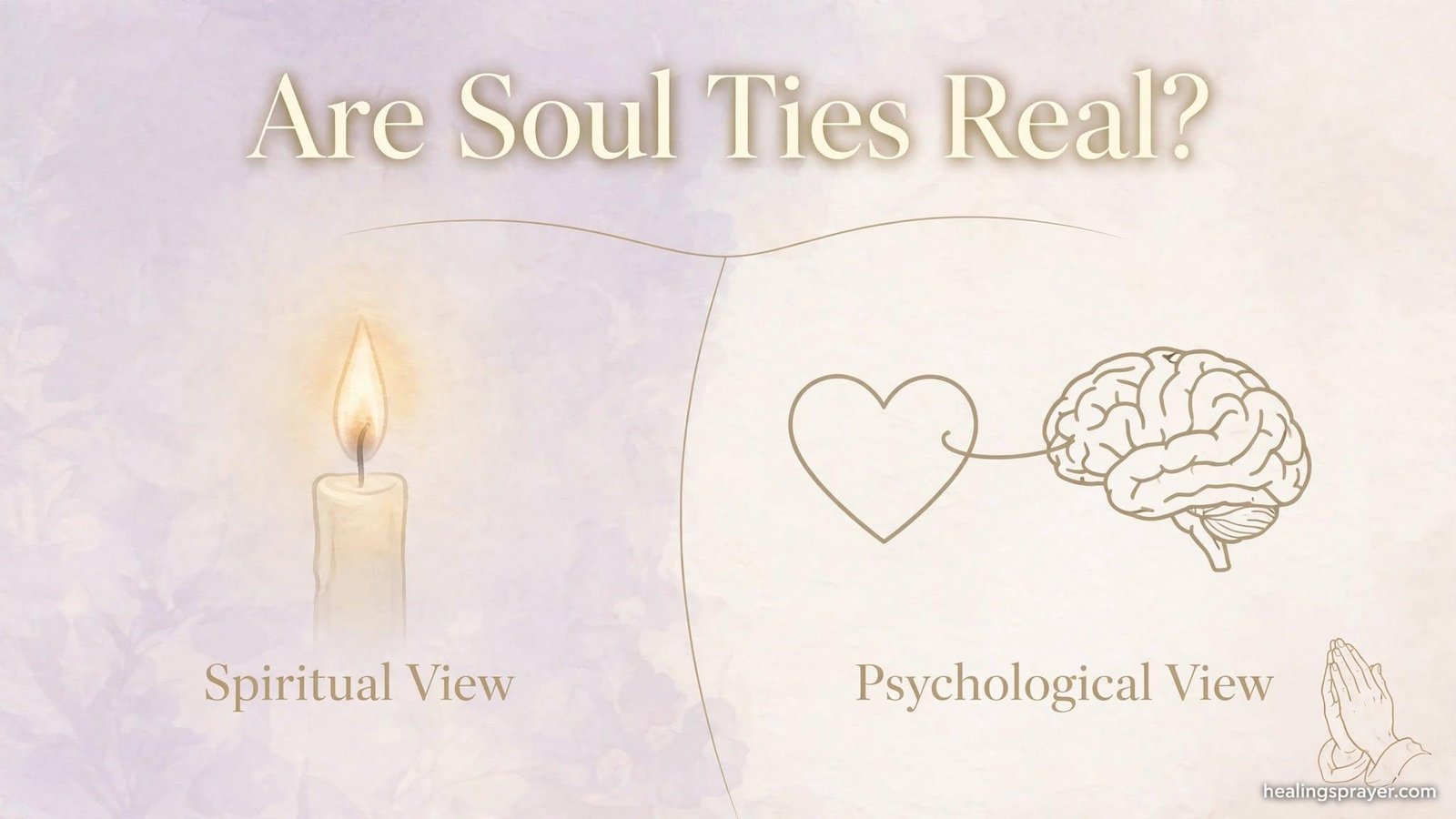
Whether soul ties are real depends on how you define “real.” The experience is real. The explanation changes depending on the framework you use.
The Spiritual View
Many faith traditions teach that intimacy, vows, and deep commitment join people at a spiritual level. In this view, soul ties are real and carry weight. A bond formed in love and commitment is seen as a blessing, and a bond formed through manipulation or harm is seen as something to release through prayer, counsel, and healthy boundaries.
If your faith matters to you, this framework can give your healing a clear language and structure.
The Psychological View
“Soul tie” is not a clinical term, and therapists do not diagnose it. But several well-studied ideas explain the same experience:
- Attachment theory. Developed by psychiatrist John Bowlby and expanded by psychologist Mary Ainsworth, it explains how early relationships shape the way we bond as adults.
- Bonding chemistry. Physical closeness and touch are associated with oxytocin, a hormone linked to trust and attachment.
- Trauma bonding. Psychologist Patrick Carnes described the “betrayal bond,” and researchers Donald Dutton and Susan Painter studied traumatic bonding in cycles of abuse and affection.
Together, these ideas show why soul ties can feel so strong. Your brain and body build real attachment, whatever name you give it.
The Honest Middle Ground
You do not have to choose one side. The label may be spiritual, but the feelings are real. Whether you call it a soul tie, an attachment, or a trauma bond, the pull you feel is genuine and can be worked through with the right tools.
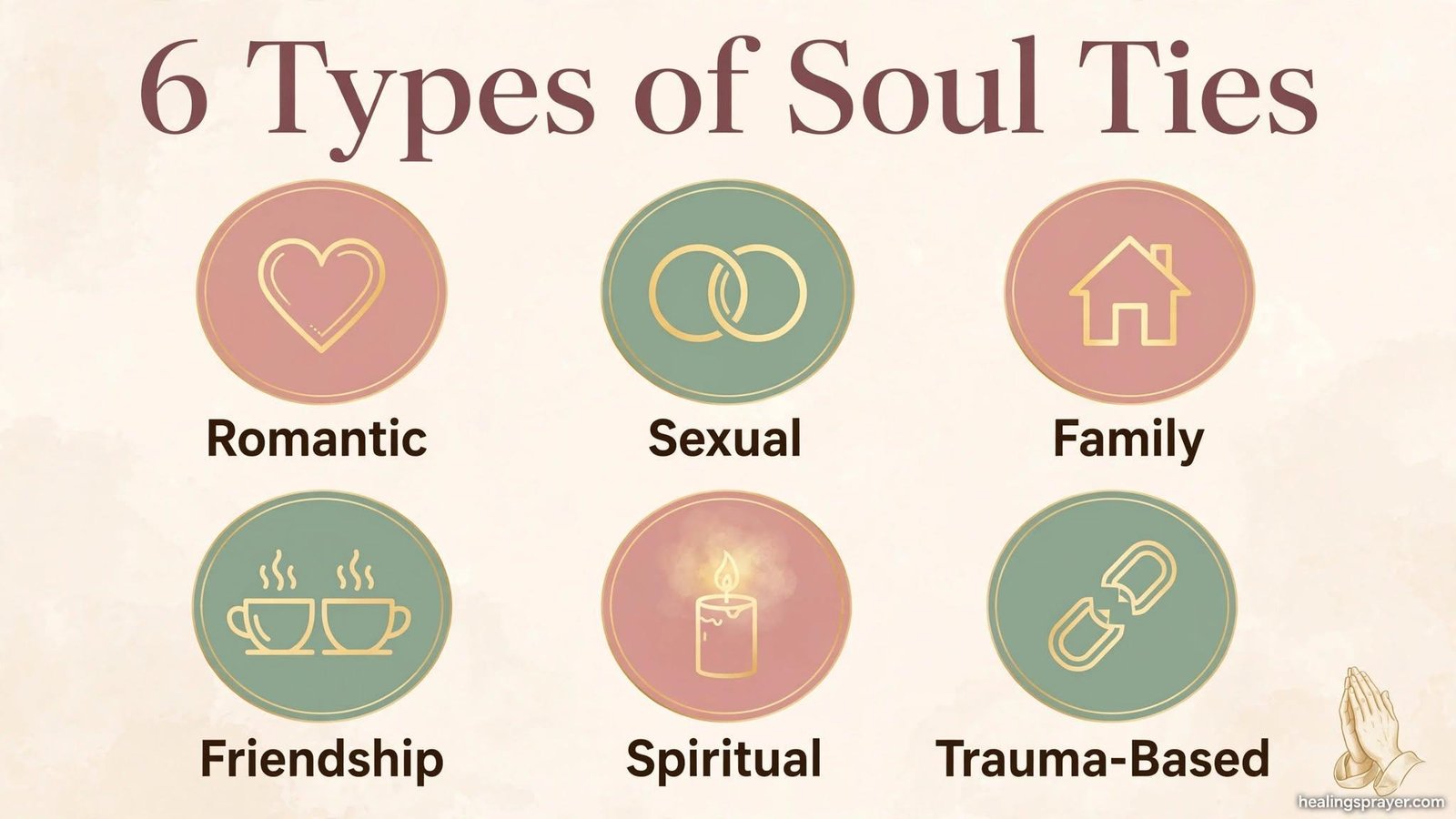
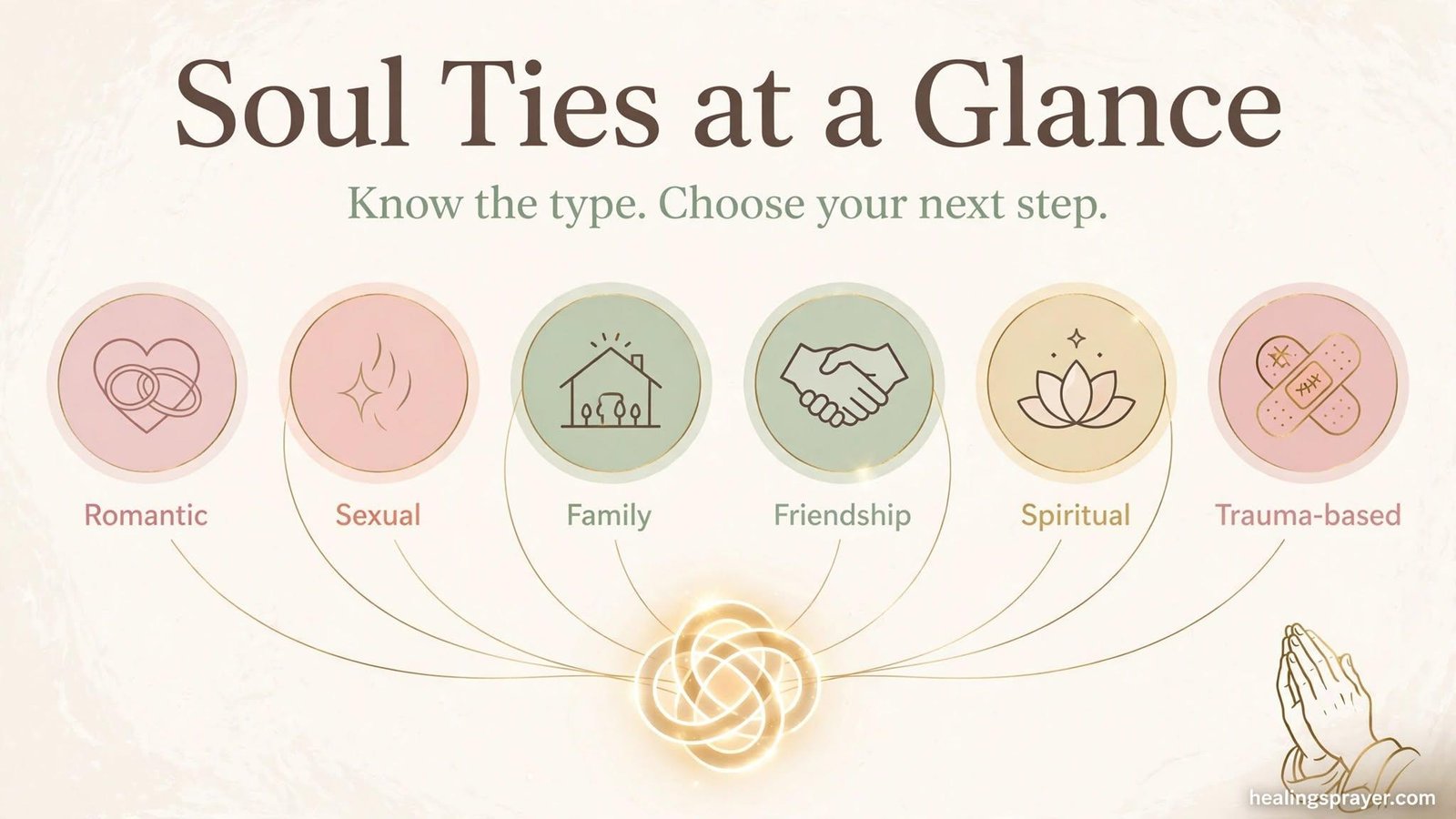
6 Types of Soul Ties
Soul ties form in many kinds of relationships, not only romantic ones. Each type below includes three signs, what a healthy version looks like, and one first step you can take today.
Romantic Soul Ties
Romantic soul ties form through dating, love, and emotional closeness. They are the most searched type, and they often stay active after a breakup.
Three signs:
- You compare every new person to your ex.
- You replay old conversations in your mind.
- You check their social media without meaning to.
Healthy version: A partnership where you feel safe, respected, and free to grow.
First step: Mute or unfollow their accounts for 30 days.
Sexual Soul Ties
Sexual soul ties form through physical intimacy. Touch releases hormones linked to bonding, so a physical connection can create emotional attachment even when the relationship was casual.
Three signs:
- You feel attached to someone who never committed to you.
- You feel guilt or emptiness after being with them.
- You keep going back despite promising yourself you would not.
Healthy version: Physical intimacy within a committed, honest, and mutually respectful relationship.
First step: Write down what you were hoping to receive from the connection, then decide if you can receive it elsewhere.
Family Soul Ties
Family soul ties form through parents, siblings, and relatives. They shape your first ideas about love, safety, and worth.
Three signs:
- You feel responsible for a relative’s emotions.
- You seek approval you never received.
- You repeat family patterns without meaning to.
Healthy version: A family bond with warmth, boundaries, and room for each person to be themselves.
First step: Name one family pattern you want to stop repeating.
Friendship Soul Ties
Friendship soul ties form through years of shared history, trust, and support. Many are healthy, but some become one-sided or controlling.
Three signs:
- You feel anxious when a friend pulls away.
- You change your opinions to keep the friendship.
- You feel drained after most interactions.
Healthy version: A friendship where both people give and receive support, and time apart causes no panic.
First step: Say no to one request this week and notice how the friendship responds.
Spiritual and Religious Soul Ties
Spiritual soul ties form through shared faith, prayer, or a mentor-student relationship. Many people see these as meaningful, but they can become unhealthy when a leader or group gains too much control over your choices.
Three signs:
- You feel unable to make decisions without one person’s approval.
- You fear punishment for questioning them.
- You feel your faith depends on that person, not on your own relationship with God.
Healthy version: A community or mentor who encourages your growth and respects your independence.
First step: Spend ten minutes daily in personal prayer or reflection without any intermediary.
Trauma-Based Soul Ties
Trauma-based soul ties form in relationships with cycles of hurt and affection. This type is also called a trauma bond, and it is always harmful.
Three signs:
- Kindness and cruelty from the same person leave you confused.
- You defend their behavior to others.
- You feel afraid to leave, even though you are unhappy.
Healthy version: There is no healthy version of a trauma bond, but a safe, stable relationship is the goal.
First step: Tell one trusted person or a professional what is happening. If you are in danger, contact local emergency services or a domestic violence helpline in your area.
Also Read : Beautiful Blessing Quotes to Share Love, Hope, and Positive Energy
Healthy vs. Unhealthy Soul Ties
Not every soul tie needs to be broken. Some deserve to be protected. The difference lies in how the bond makes you feel and behave over time.
Traits of Healthy Soul Ties
- You feel calm, safe, and supported.
- You can be apart without anxiety.
- Both people respect each other’s boundaries.
- The bond encourages your growth and independence.
- Honesty is normal, and conflict gets resolved.
Traits of Unhealthy Soul Ties
- You feel anxious, drained, or stuck.
- You feel unable to detach even when it hurts.
- One person controls or manipulates the other.
- Your identity, mood, and choices depend on them.
- You ignore red flags and make excuses.
A simple test: after time with this person, or after thinking about them, do you feel more like yourself or less like yourself? Healthy soul ties leave you fuller. Unhealthy ones leave you smaller.
10 Signs and Symptoms of Soul Ties
The symptoms of soul ties are easier to spot when the tie is unhealthy. Here are ten signs to watch for.
- You cannot stop thinking about them. Even long after the relationship ends, they occupy your thoughts.
- You feel drawn back despite the pain. You return to someone who hurt you, or want to.
- Your mood depends on them. A message lifts you and silence crushes you.
- You feel incomplete without them. Your identity is tied to the relationship.
- You ignore red flags. You excuse behavior you would never accept from others.
- Moving on feels impossible. Every attempt to detach brings guilt, anxiety, or grief.
- You compare everyone to them. New people never measure up to the memory.
- You dream about them often. They appear in your sleep long after contact ended.
- Your body reacts. Poor sleep, loss of appetite, or a heavy chest show up during separation.
- You feel you have known them forever. The connection feels older than the actual time you spent together.
One or two signs do not mean something is wrong. A cluster of them, especially with pain, is a signal to pause and look closely at the bond.
Quick Self-Check Questions
Answer these honestly:
- Do I feel better or worse after contact with this person?
- Would I accept this behavior from a friend’s partner?
- Am I staying because I want to, or because I feel unable to leave?
- Have I lost interest in things I used to enjoy?
If most answers point toward “worse,” “no,” or “unable,” your soul tie may be unhealthy.
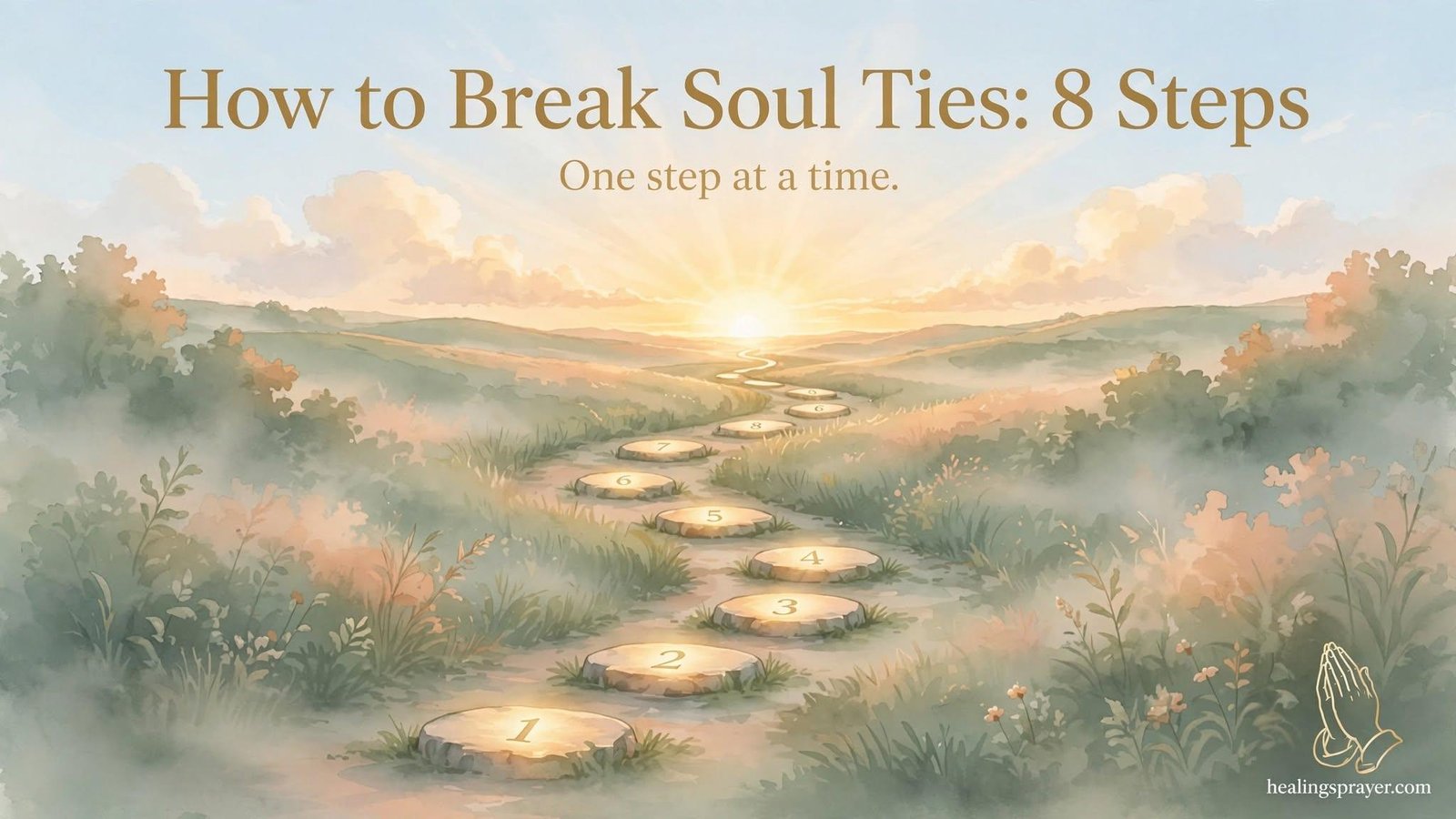
How to Break Soul Ties: 8 Steps
Breaking soul ties takes time. There is no shortcut, but each step below moves you forward. Work through them in order, and repeat any step you need.
Step 1: Acknowledge the Tie
Name what you feel without judging yourself. Say it plainly: “I am still emotionally attached to this person, and it is affecting my life.” Acceptance is where breaking soul ties begins, because you cannot release what you refuse to see.
Step 2: Cut or Limit Contact
Constant messages, checking their profile, and “just one call” keep the bond alive. Where possible, go fully no-contact for at least 30 days. If you must interact because of co-parenting or work, keep it short, practical, and free of emotional talk.
Step 3: Remove Reminders
Put gifts and photos in a box out of sight. Mute or unfollow their accounts, delete old chat threads, and avoid places that trigger memories for a while. Your environment either feeds the tie or helps you starve it.
Step 4: Feel Your Emotions
Grief, anger, and longing are part of letting go. Trying to push them away often makes them stronger. Set aside ten to fifteen minutes each day to feel what comes up, write it down, and then return to your day.
Step 5: Rebuild Your Own Identity
Return to hobbies, goals, and friends that made you feel like yourself. Each small act of independence weakens the pull of the tie. Start with one thing you enjoyed before the relationship and do it this week.
Step 6: Lean on Your Support System
Talk with trusted friends or family, and be honest about what you are going through. Isolation makes soul ties stronger because the tie becomes the only place your mind goes. Even one weekly conversation with a supportive person helps.
Step 7: Use Your Faith Practices
If faith is part of your life, prayer, meditation, and spiritual guidance can support your healing. Many traditions include prayers for releasing ungodly soul ties, often asking for freedom, forgiveness, and a renewed sense of identity. Speak with a pastor, priest, or spiritual mentor you trust for guidance that fits your belief system.
Also Read : Peace and Blessings Quotes to Calm Your Heart and Lift Your Spirit
Step 8: Seek Professional Help
A licensed therapist can help you work through attachment patterns, trauma bonds, and codependency. This step is especially important if the relationship involved abuse, or if you cannot function day to day. Asking for help is a strong, practical decision.
30-Day Plan to Release Soul Ties
A plan gives your healing a shape. Use this four-week outline as a starting point, and adjust it to your situation.
Week 1: Stop the Feeding
- Begin no-contact or minimal contact.
- Mute, unfollow, or block accounts.
- Box up physical reminders.
- Write down the reasons the tie is hurting you.
Week 2: Feel and Process
- Journal for 15 minutes daily.
- Talk with one supportive person.
- Notice your triggers and write them down.
- Practice slow breathing when urges to reach out appear.
Week 3: Rebuild Yourself
- Restart one old hobby or begin a new one.
- Set one small personal goal.
- Spend time with people who lift you up.
- Add prayer, meditation, or quiet reflection each morning.
Week 4: Set Boundaries and Look Ahead
- Decide what level of contact, if any, is healthy going forward.
- Write down what you want from your next relationships.
- Review your progress and celebrate small wins.
- Consider booking a session with a therapist or counselor.
Journaling Prompts and Release Statements for Soul Ties
Journaling turns vague feelings into clear thoughts. Use the prompts to reflect, and the statements to reinforce your decision to let go.
8 Journaling Prompts
- What did I hope this person would give me that I am still waiting for?
- Which parts of the bond felt good, and which felt harmful?
- What red flags did I ignore, and why?
- When do I feel the strongest urge to reach out?
- Who was I before this bond, and what did I love doing?
- What do I need to forgive, in them or in myself?
- What would a healthy connection look and feel like for me?
- What is one small action I can take today to support my healing?
8 Release Statements
Say these aloud or write them down each morning:
- I release the hold this bond has on my thoughts.
- I am whole without this person.
- I choose peace over the pull of the past.
- I forgive what happened, and I keep my boundaries.
- My worth does not depend on anyone’s attention.
- I am free to build healthy connections.
- Every day, my mind and heart grow stronger.
- I close this chapter and move forward with clarity.
Common Mistakes When Breaking Soul Ties
Many people struggle to break soul ties because of a few repeating mistakes. Avoid these and your progress will move faster.
1. Keeping “friendly” contact too early. A casual message can restart the whole cycle. Give yourself real distance first.
2. Replacing the person too quickly. A rebound may distract you, but it does not release the old bond. It can also create a new tie before the old one is resolved.
3. Suppressing your emotions. Ignoring grief only delays it. Feel it in small, planned doses through journaling, prayer, or conversation.
4. Watching their social media. Every glance renews the tie. Mute or block for the first 30 days at least.
5. Blaming yourself for still caring. Attachment is a normal human response. Feeling attached does not mean you are weak.
6. Rushing the timeline. Soul ties often take weeks or months to weaken. Judge your progress by direction, not speed.
7. Doing it alone. Support from friends, faith leaders, or therapists shortens the path. Silence lengthens it.
8. Ignoring safety. If the relationship involved abuse or threats, your first priority is safety. Reach out to a professional or a local helpline.
9. Skipping the “why.” Understanding why you bonded with this person helps you avoid repeating the pattern. Use the journaling prompts above.
10. Expecting no bad days. Setbacks are normal. One difficult day does not undo your progress.
How to Build a Healthy Soul Connection
Breaking unhealthy soul ties is only half of the work. The other half is building bonds that support you. A healthy soul connection has clear features you can look for and practice.
- Mutual respect. Both people listen, and both people feel heard.
- Honesty. You can say hard things without fear of punishment.
- Freedom. Time apart is normal, and independence is encouraged.
- Shared values. You may not agree on everything, but your core values align.
- Emotional safety. You can be yourself without performing.
- Growth. The bond helps both people become better versions of themselves.
Practical ways to build healthy soul ties:
- Go slowly. Let trust grow through consistent actions, not intense words.
- State your boundaries early and calmly.
- Notice how your body feels around the person. Calm is a good sign. Constant tension is a warning.
- Keep your own friendships, hobbies, and goals alive.
- Pay attention to patterns. One kind act does not outweigh repeated harm.
If you are curious about starting fresh, Also Read : 300+ Uplifting Loyal Love Quotes About Trust, Faithfulness, and Staying True
Soul Ties Comparison Table
| Type of Soul Tie | How It Forms | Healthy or Harmful | Example First Step |
|---|---|---|---|
| Romantic | Love, dating, emotional closeness | Either | “I will mute their accounts for 30 days.” |
| Sexual | Physical intimacy | Often harmful outside commitment | “I will write down what I was hoping to receive.” |
| Family | Parents, siblings, relatives | Either | “I will name one pattern I want to stop repeating.” |
| Friendship | Shared history and trust | Usually healthy | “I will say no to one request this week.” |
| Spiritual | Faith, prayer, mentors | Either | “I will spend ten minutes in personal prayer daily.” |
| Trauma-Based | Cycles of hurt and affection | Always harmful | “I will tell one trusted person what is happening.” |
Soul Ties FAQ
What does soul tie mean?
A soul tie is a deep emotional or spiritual bond between two people that continues to influence them even after separation. It can form through romance, intimacy, family, friendship, faith, or shared pain, and it can be healthy or harmful.
Are soul ties real?
Soul ties are real as an experience, though not as a clinical diagnosis. Many faith traditions describe them as spiritual bonds, while psychology explains the same feelings through attachment, bonding hormones, and trauma bonding.
What are the symptoms of soul ties?
The main symptoms are constant thoughts about the person, difficulty moving on, mood swings tied to them, ignoring red flags, and feeling incomplete without them. Sleep problems and dreams about the person are also common.
How do you break a soul tie?
You break a soul tie by acknowledging it, limiting contact, removing reminders, processing your emotions, rebuilding your identity, leaning on support, using your faith practices, and getting professional help when needed.
How long does it take to break a soul tie?
There is no fixed timeline. Some people feel relief in a few weeks, while others need several months. The length of the relationship, its intensity, and your support system all matter.
Can you have a soul tie with someone you only slept with once?
Yes, it is possible. Physical intimacy can create a strong emotional bond through hormones and expectations, even without a long relationship. Some people feel it strongly, and others do not.
Are soul ties always bad?
No. Healthy soul ties in marriage, close friendship, and family bring safety, joy, and growth. Only soul ties that harm your wellbeing need to be released.
What is the difference between a soul tie and a trauma bond?
A soul tie can be positive or negative, while a trauma bond is always harmful. A trauma bond forms in cycles of mistreatment and affection, often with fear or control.
Is a soul tie the same as a twin flame?
No. “Twin flame” is a spiritual idea about a mirror soul, while a soul tie is a broader term for any deep bond between two people.
Can soul ties come back after you break them?
They can weaken and return if you restart contact, revisit old patterns, or leave the emotional work unfinished. Clear boundaries and continued self-care help prevent this.
Can prayer help break soul ties?
Many people find prayer helpful for peace, forgiveness, and strength. Prayer works best alongside practical steps such as boundaries, journaling, and support from others.
When should I see a therapist about soul ties?
See a therapist if the bond disrupts your sleep, work, or relationships, or if the relationship involved abuse. A professional can help you understand attachment patterns and build healthier ones.
Final Thoughts on Soul Ties
Soul ties can bring deep meaning to your life or keep you stuck in pain. Understanding the soul tie meaning, recognizing the signs, and knowing how to break unhealthy soul ties puts the choice back in your hands.
Start small. Pick one step from this guide today, whether that is muting an account, writing in your journal, or saying a short prayer for peace. Healing from soul ties is built from small, repeated choices.
If a relationship feels heavy, controlling, or unsafe, reach out to someone you trust or a mental health professional. You deserve connections that support you.

Welcome to Healings Prayer!
Healings Prayer is a faith-based platform created to offer comfort, hope, and encouragement through prayer and Scripture. Our mission is to help people find peace in difficult moments and draw closer to God through heartfelt prayers and Bible verses.