
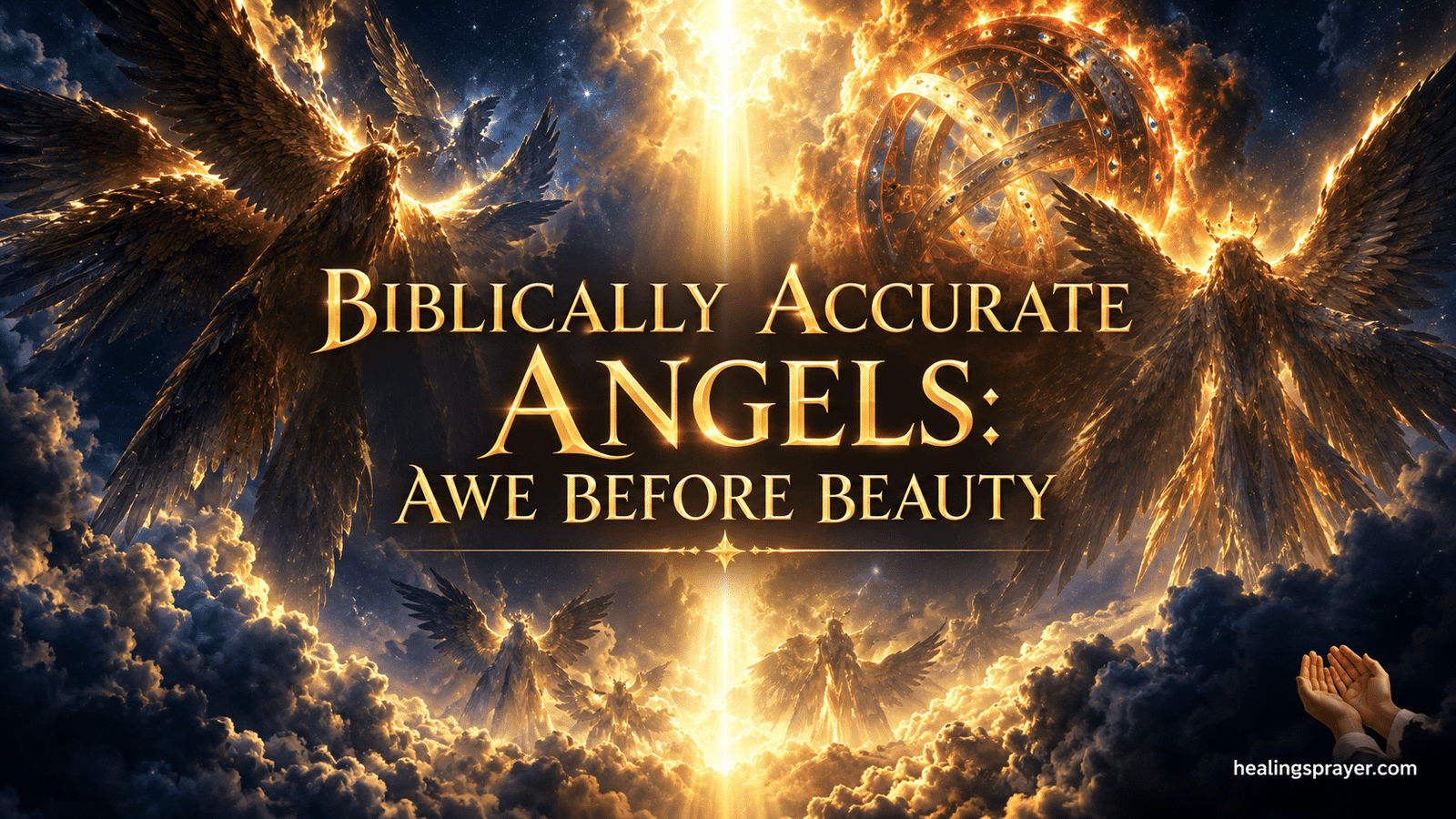
Wings, eyes, fire and wheels: biblically accurate angels look nothing like the soft figures on greeting cards.
Search for “angel” online and you will see a gentle figure in a white robe, with soft feathered wings and a glowing halo. That image fills greeting cards, cartoons, tattoos and porcelain figurines. It is comforting, but it is not what the Bible describes.
Biblically accurate angels are far more striking. In scripture, some angels have six wings and cover their faces before God. Some have four faces. Others are wheels covered with eyes, and others look like ordinary men who are not recognized until they speak.
That gap between popular art and the text is why the phrase biblically accurate angels has spread so widely online. Memes place a wheel of fire or a many-faced creature next to a cartoon angel and ask which one is real. The joke works because people sense that the soft picture is incomplete.
The meme, however, is only a starting point. The real source is a small group of passages: Isaiah 6, Ezekiel 1 and 10, Daniel 10, Luke 1 and Revelation 4 to 5. Reading them directly gives you a better picture of biblically accurate angels than any image online.
This guide covers every major type of angel in scripture, so it works as a complete reference on biblically accurate angels. You will see what the text says about seraphim, cherubim, ophanim, the living creatures, archangels and the angels of Revelation. You will also see which details come from tradition, medieval art or internet memes.
Along the way you will find real verses, the original Hebrew and Greek meanings, a comparison table, a full FAQ and a practical section on what these beings teach us about God. Many readers study angels because they want reassurance, and a can sit alongside this study.
Whether you are a believer, a student of scripture or simply curious, you will leave with a clear, verse-based answer to the question: what do angels look like in the Bible? You will also know how to tell real descriptions of biblically accurate angels from invented ones.
What Are Biblically Accurate Angels?
Biblically accurate angels are the heavenly beings of scripture described exactly as the text portrays them: winged, fiery, many-eyed or plainly human in form, and always serving God as worshipers and messengers. The phrase separates what the Bible says from what later art, tradition and memes added.
That definition matters because the Bible does not give one look to every angel. Biblically accurate angels come in several kinds, and each kind has its own details. Seraphim have six wings. Cherubim have four faces in Ezekiel. Ophanim are described as wheels. Messenger angels often look like men.
Why Biblically Accurate Angels Do Not Share One Look
People who search for biblically correct angels or an angel biblically accurate description are usually asking one question: which details come from the text? The answer sits in a small set of passages, so each type of biblically accurate angels has to be matched to its own verses.
An angel biblically accurate to its passage is one whose details can all be traced to a verse. The label itself is modern. No biblical writer used the phrase “biblically accurate.” Some people search for “biblical accurate angels” instead, which is a variation of the same question. Still, the instinct behind it is sound: read the text first, then compare everything else to it.
Three Ground Rules for Reading Angel Passages
First, angels are created beings. Psalm 148:2-5 calls the angels to praise the Lord because he commanded and they were created. Colossians 1:16 says all things in heaven and on earth were created through Christ. Even the most powerful of the biblically accurate angels is a creature, not a god, and none is equal to God.
Second, angels are servants. Hebrews 1:14 calls them ministering spirits sent to serve those who will inherit salvation. Their role is worship and service, not independent power. This holds for all biblically accurate angels.
Third, angels are not humans who have died. The Bible never says people become angels. Psalm 8:5 and Hebrews 2:7 describe humans as made a little lower than the angels, which treats the two as different orders of creation. Biblically accurate angels are therefore a separate order of beings.
How This Guide Sorts Scripture, Tradition and Memes
This guide uses a simple test. If a detail appears in a verse, it is biblical. If it appears only in later writing, such as the nine choirs described by Pseudo-Dionysius around the year 500, it is tradition. If it appears only in a meme, it is imagination.
Christian traditions also differ on which books count as scripture, so the guide says clearly when a detail comes from a book that not every tradition accepts. That test keeps every claim about biblically accurate angels tied to a source you can check.
Description of Angels in the Bible
The description of angels in the Bible is more varied than most people expect. The text gives detailed pictures of a few angel types and almost no physical detail for the rest. Knowing this helps you read every claim about biblically accurate angels with the right expectations.
What the Word “Angel” Means
The Hebrew word mal’ak and the Greek word angelos both mean “messenger.” They name a job before they name a body.
The same words are used for human messengers. Genesis 32:3 uses mal’ak for the men Jacob sent ahead to Esau, and Luke 7:24 uses angelos for the messengers of John the Baptist. The prophet Malachi’s name means “my messenger.”
This is why the bible description of angels often focuses on what angels say and do, not on how they look. The first question the text asks is who sent them and why.
Why Angels Sometimes Look Like Ordinary People
In Genesis 18:2, Abraham sees three men standing near his tent and treats them as human guests. Genesis 19:1 identifies two of them as angels arriving in Sodom, where the townspeople also treat them as men.
Joshua 5:13-15 describes a “man” with a drawn sword who is a heavenly commander. Mark 16:5 describes a young man in a white robe at the tomb. Acts 1:10 describes two men in white clothing at the ascension.
Hebrews 13:2 gives the practical result: some people have shown hospitality to angels without knowing it. A messenger angel can look entirely ordinary, and that is part of the picture of biblically accurate angels.
Angels Shown in Shining Glory
Other passages show angels in overwhelming brightness. Daniel 10:5-6 describes a man in linen whose body is like beryl, whose face is like lightning and whose eyes are like flaming torches. Matthew 28:3 says the angel at the tomb looked like lightning, with clothes white as snow.
So the text allows both extremes: the plain traveler and the blazing messenger. Neither one cancels the other, and both count as biblically accurate angels.
What the Bible Does Not Say
A careful bible description of angels also lists what is missing. Some of the most common details in angel art have no verse behind them:
- Halos. No passage describes a halo on an angel.
- Wings on every angel. Wings are named for seraphim, cherubim and the living creatures, and Revelation 14:6 shows an angel flying. Messenger angels in human form are not described with wings.
- Baby or child angels. Angels in human form appear as grown men.
- Gentle softness. Many angel encounters in scripture cause fear.
A truly accurate angel depiction starts by matching each angel type to its own passage. A single “angel look” does not exist in scripture. There is a seraph look, a cherub look, a wheel look and a human-messenger look, and each one comes from a different text. That variety is what makes biblically accurate angels so much more interesting than the single cartoon image.
Also Read : 80+ Powerful Words for Strength, Healing, and Peace
Biblically Accurate Seraphim
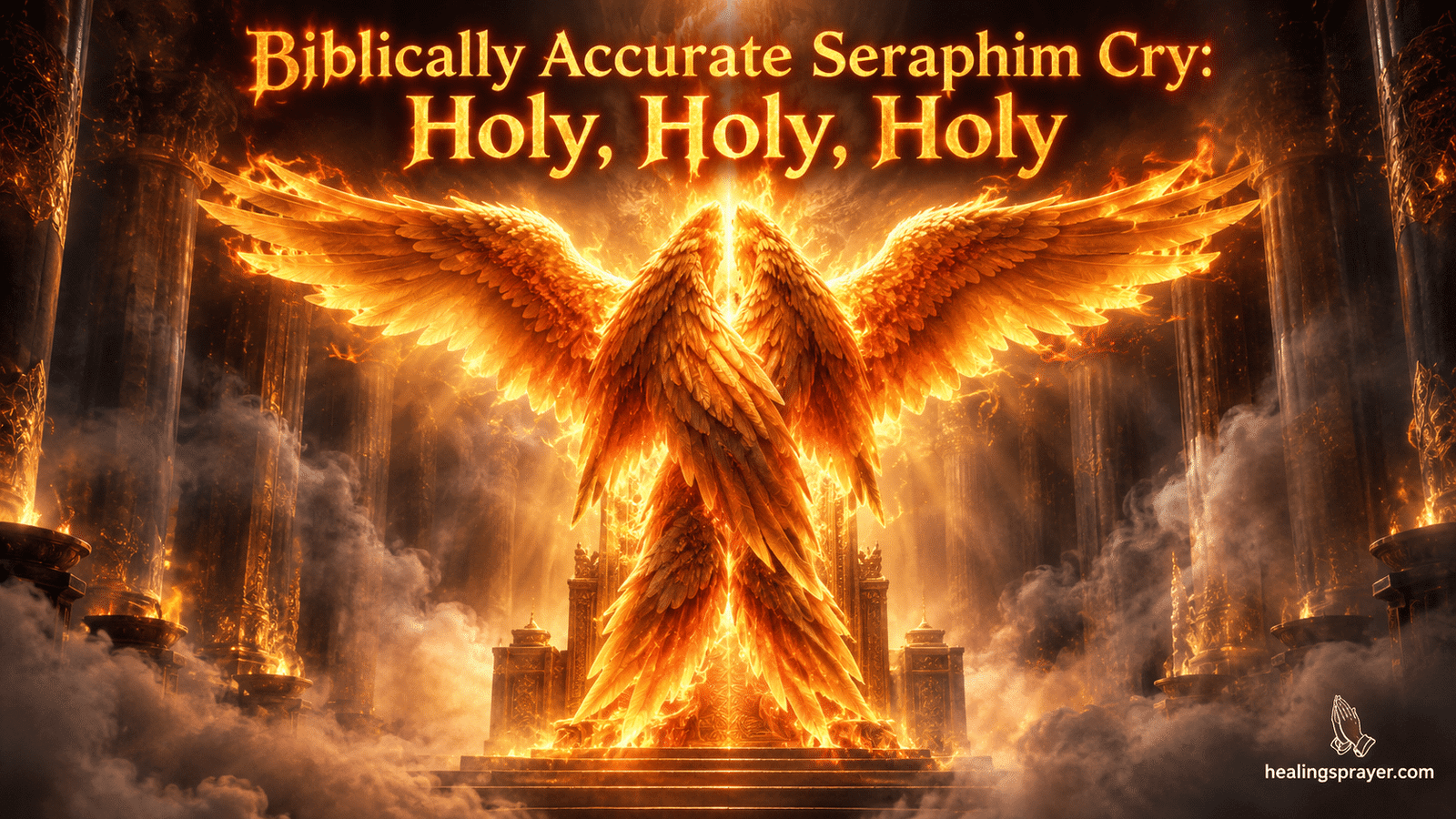
The seraphim are named in only one passage of the Bible: Isaiah 6:1-7. That makes biblically accurate seraphim easy to study, because everything the text says about them fits in a few verses. It also makes them one of the clearest examples of biblically accurate angels in the whole Old Testament.
The Vision in Isaiah 6
Isaiah sees the Lord seated on a high and lifted-up throne, and the hem of his robe fills the temple. Above the throne stand the seraphim (Isaiah 6:1-2).
The word seraph comes from the Hebrew root saraph, which means “to burn.” The seraphim are, in the plainest sense, “the burning ones.” Fire and light define them, which is why biblically accurate seraphim are pictured as flame, not as soft figures.
Six Wings and What Each Pair Does
Isaiah 6:2 says each seraph has six wings. With two they cover their faces, with two they cover their feet, and with two they fly.
Many interpreters read this as a picture of attitude. Covering the face shows reverence before God’s glory. Covering the feet, a Hebrew idiom that can refer to the lower body, shows humility. Flying shows readiness to serve.
Notice the proportion: four of the six wings express reverence and only two express action. The seraphim are the clearest picture in scripture of worship coming before service, and they set the tone for how biblically accurate angels relate to God.
What Biblically Accurate Seraphim Say and Do
The seraphim call to one another, “Holy, holy, holy, is the LORD of hosts: the whole earth is full of his glory” (Isaiah 6:3, KJV). Their voices shake the doorposts of the temple, and the house fills with smoke (Isaiah 6:4).
Isaiah responds with fear: “Woe is me.” He knows he is a man of unclean lips living among an unclean people (Isaiah 6:5). The nearness of holiness exposes his own weakness.
The Burning Coal and What It Means
One seraph flies to Isaiah with a burning coal taken from the altar with tongs. The seraph touches Isaiah’s mouth and says his guilt is taken away and his sin is atoned for (Isaiah 6:6-7).
The coal comes from the altar, the place of sacrifice, so the cleansing is tied to atonement. The seraph does not decide who is forgiven. It carries out what God has already provided.
This detail shows the double role of the seraphim, and of many biblically accurate angels. They worship, and they serve. Their fire does not destroy the prophet. It cleanses him and prepares him to say, “Here am I; send me” (Isaiah 6:8).
Are Seraphim Serpents?
The same Hebrew word, saraph, is used for “fiery serpents” in Numbers 21:6-8 and for a “fiery flying serpent” in Isaiah 14:29 and 30:6. Some scholars connect this with winged serpent imagery found in ancient Egypt and the wider Near East.
Isaiah 6 does not call the seraphim snakes. It gives them faces, feet and hands, and it has them speak. The safest reading is that the word points to a burning, fiery nature, not to a reptile.
What Biblically Accurate Seraphim Teach
The biblically accurate seraphim of Isaiah 6 are not gentle decorations. They are blazing, winged worshipers who proclaim God’s holiness so powerfully that the building shakes. If you picture them, picture fire, six wings and a voice that fills a temple. When someone asks what biblically accurate angels look like, the seraph is the first answer to give.
Cherubim in the Bible: Not the Babies You Imagine
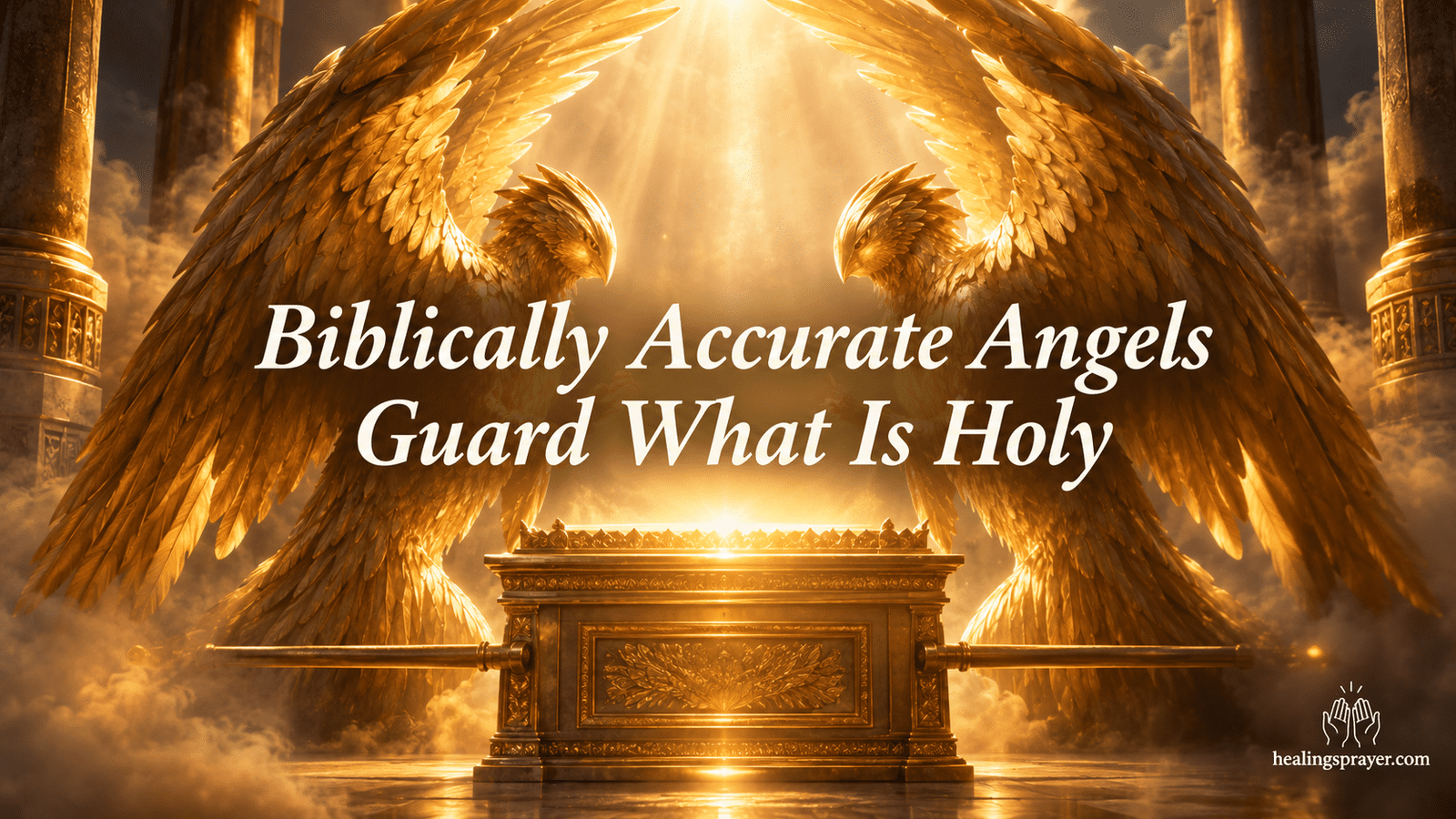
Cherubim appear dozens of times in the Old Testament. The Hebrew word is kerub, plural kerubim. None of the passages describe a chubby child with tiny wings. Among biblically accurate angels, the cherubim are guardians of holy places.
Guardians at Eden
Genesis 3:24 says God placed cherubim at the east of the garden of Eden, along with a flaming sword that turned every way, to guard the way to the tree of life. This is the first mention of cherubim, and their job is protection. That fits the pattern of biblically accurate angels as servants with assigned tasks.
Cherubim on the Ark and in the Temple
Exodus 25:18-22 instructs Moses to make two cherubim of hammered gold on the mercy seat of the ark. Their wings spread upward, they face each other, and God promises to speak from above the mercy seat, between them.
Cherubim were also woven into the tabernacle curtains and veil (Exodus 26:1, 31). In Solomon’s temple, two huge olive-wood cherubim covered in gold stood in the Most Holy Place, each ten cubits high (1 Kings 6:23-28).
Poetry reflects the same picture. Psalm 80:1 speaks of the Lord enthroned between the cherubim, and Psalm 18:10 says he rode on a cherub and flew.
Cherubim in Ezekiel
Ezekiel 10 gives the most detailed view. Each cherub has four faces: the face of a cherub, a human face, a lion’s face and an eagle’s face (Ezekiel 10:14). They have wings, human hands under their wings and wheels beside them.
In Ezekiel 10:20 the prophet states that the living creatures he saw earlier by the river Chebar were cherubim. This links Ezekiel 1 and Ezekiel 10 into one vision. These details make the cherubim some of the most complex biblically accurate angels in the text.
Where the Baby Image Came From
The chubby child image comes from art, not scripture. During the Renaissance, artists revived a classical decorative figure of winged children, known as putti, and merged it with the word “cherub.” Roman images of Cupid also contributed to the look.
The result is a sweet image that has almost nothing in common with Genesis, Exodus or Ezekiel. Cherubim in the Bible guard Eden, carry God’s throne and stand over the ark. They are mighty, not cute, and any list of biblically accurate angels has to say so plainly.
Ophanim: The Wheel Within a Wheel Angels
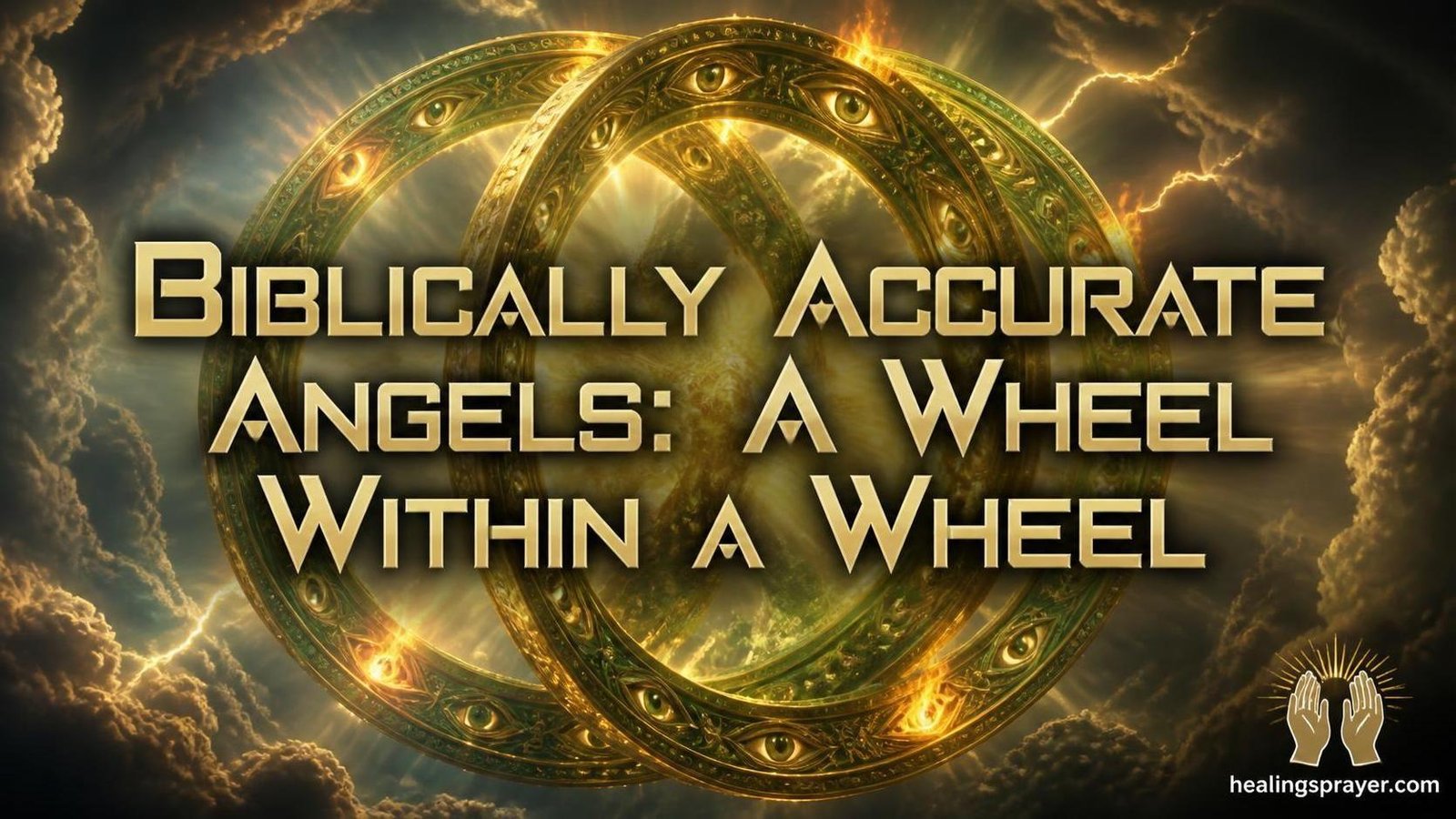
The ophanim are the most searched of all biblically accurate angels, and the most misunderstood. The Bible describes them in strange detail, yet the internet often exaggerates them. Here is what the text actually says.
The Setting of Ezekiel’s Vision
Ezekiel 1:1 places the prophet among the exiles by the river Chebar in Babylon. He sees a stormy wind coming from the north, a great cloud, flashing fire and a brightness around it like glowing amber (Ezekiel 1:4).
Out of that fire come four living creatures, and beside them he sees the wheels. The scene happens far from the temple in Jerusalem, which is part of its meaning. Even in exile, the biblically accurate angels of Ezekiel’s vision show that God’s throne is present and mobile.
What Does “Ophanim” Mean?
Ofan is the Hebrew word for “wheel,” and ofanim (spelled “ophanim” in English) is the plural. In Ezekiel 1:15, the prophet sees a wheel on the ground beside each of the four living creatures.
So the ophanim are first of all wheels. Later Jewish and Christian tradition treated them as a class of angelic beings, and the sections below separate the text from the tradition.
The Wheel Within a Wheel
Ezekiel 1:16 says the wheels gleamed like beryl, a gemstone of golden or sea-green color. Each looked as if a wheel were set inside another wheel. This is the source of the famous phrase wheel within a wheel.
Because of this construction, the wheels could move in any of the four directions without turning (Ezekiel 1:17). Their rims were tall and awe-inspiring (Ezekiel 1:18).
Angels with Eyes
Ezekiel 1:18 says the rims of the wheels were full of eyes all around. In Ezekiel 10:12, the description grows: the cherubim’s whole bodies, backs, hands, wings and the wheels were full of eyes.
Angels with eyes appear nowhere else in the Bible with this much detail. The eyes are usually read as a sign of complete awareness. Zechariah 4:10 speaks of the eyes of the Lord ranging through the whole earth, and 2 Chronicles 16:9 says his eyes run to and fro to support those whose hearts are loyal to him. These angels with eyes are among the most unusual biblically accurate angels.
The meaning is not surveillance for its own sake. It is the comfort that nothing happens outside God’s sight.
Movement and the Spirit
Ezekiel 1:19-21 says the wheels moved with the living creatures. When the creatures rose, the wheels rose, because the spirit of the living creature was in the wheels.
Ezekiel 10:13 uses the Hebrew word galgal, “whirling wheel,” for the wheels. They were not separate machines. They were united with the cherubim and with God’s moving throne. That unity is one reason the ophanim stand out among biblically accurate angels.
In Ezekiel 10:2, God tells a man in linen to take burning coals from between the wheels and scatter them over the city. The wheels are connected to both God’s presence and his judgment.
Ophanim, Thrones and the Throne of God
Above the creatures, Ezekiel 1:26 describes the likeness of a throne like sapphire, and on it a figure like a human form. Daniel 7:9 also pictures God’s throne with wheels of burning fire.
Colossians 1:16 lists “thrones” among heavenly powers. Later Christian writers, especially Pseudo-Dionysius in his Celestial Hierarchy, ranked the Thrones high in a nine-level order, and tradition has often identified them with the ophanim.
The Bible itself does not say that the thrones of Colossians are the wheels of Ezekiel. That connection is a tradition, not a verse.
Ophanim in Jewish and Christian Tradition
The word appears as a name for a class of heavenly beings in 1 Enoch, a Jewish text not included in most Bibles. It also appears in Jewish liturgy, in prayers that mention the ofanim and the holy chayot (living creatures) praising God.
These later sources show how seriously readers have treated Ezekiel’s vision. They do not carry the same authority as the prophet’s own words. Readers who study biblically accurate angels should note which sources are scripture and which are commentary.
What the Bible Does Not Claim
Ezekiel does not describe a flaming ring covered with dozens of faces, and he does not name the wheels as a separate rank of angels. Many internet images blend the wheels with the living creatures, which have faces and wings.
Staying with the text, the ophanim are gleaming, interlocking wheels covered in eyes, moving with the spirit and with the throne of God. That description is already remarkable. A careful accurate angel depiction of the ophanim needs no embellishment, and it keeps biblically accurate angels tied to scripture instead of to rumor.
The Living Creatures (Hayyot) in Ezekiel and Revelation
The Hebrew word hayyot means “living ones,” and Ezekiel uses it for the four beings that carry God’s throne. They are central to understanding biblically accurate angels, because they connect Ezekiel’s vision to the book of Revelation.
The Living Creatures in Ezekiel 1
Ezekiel 1:5-14 describes four beings with a human form. Each had four faces and four wings. Their legs were straight and their feet were like a calf’s hoof, shining like burnished bronze.
Human hands were beneath their wings. The four faces were a human, a lion, an ox and an eagle (Ezekiel 1:10). These living creatures are central examples of biblically accurate angels in the Old Testament.
Fire moved among them, like burning coals or torches, and flashes of lightning came from it. The creatures darted back and forth, like the appearance of lightning (Ezekiel 1:13-14).
The Living Creatures in Revelation 4
Revelation 4:6-8 describes four living creatures around the throne. They are full of eyes in front and behind, and each has six wings. Their faces are like a lion, an ox, a man and a flying eagle.
Day and night they never stop saying, “Holy, holy, holy, is the Lord God Almighty, who was and is and is to come” (Revelation 4:8). This echoes the song of the seraphim in Isaiah 6:3.
These biblically accurate angels stay active through the rest of the book. In Revelation 5:8 they fall down before the Lamb, and in Revelation 6:1 one of them calls out as a seal is opened.
How the Pictures Compare
Ezekiel’s creatures have four wings, and John’s have six. Ezekiel gives each creature four faces, while John gives each one a single face. These differences lead interpreters to ask whether these are the same beings seen in different ways, or related beings in different roles.
Ezekiel 10:20 explicitly identifies his living creatures with cherubim. Revelation’s creatures, with six wings and constant worship, resemble the seraphim of Isaiah.
The safest reading is that scripture shows one throne room seen through different prophets’ eyes, with different emphasis each time. That is a good reminder that biblically accurate angels cannot be reduced to one simple formula.
Early Christian Reading
Irenaeus, a second-century Christian bishop, linked the four faces to the four Gospels. This reading became popular in Christian art, where the lion, ox, man and eagle are used as Gospel symbols. It is a tradition, not a verse, but it shows how seriously early Christians took these visions.
Archangels in the Bible: Michael, Gabriel and Raphael
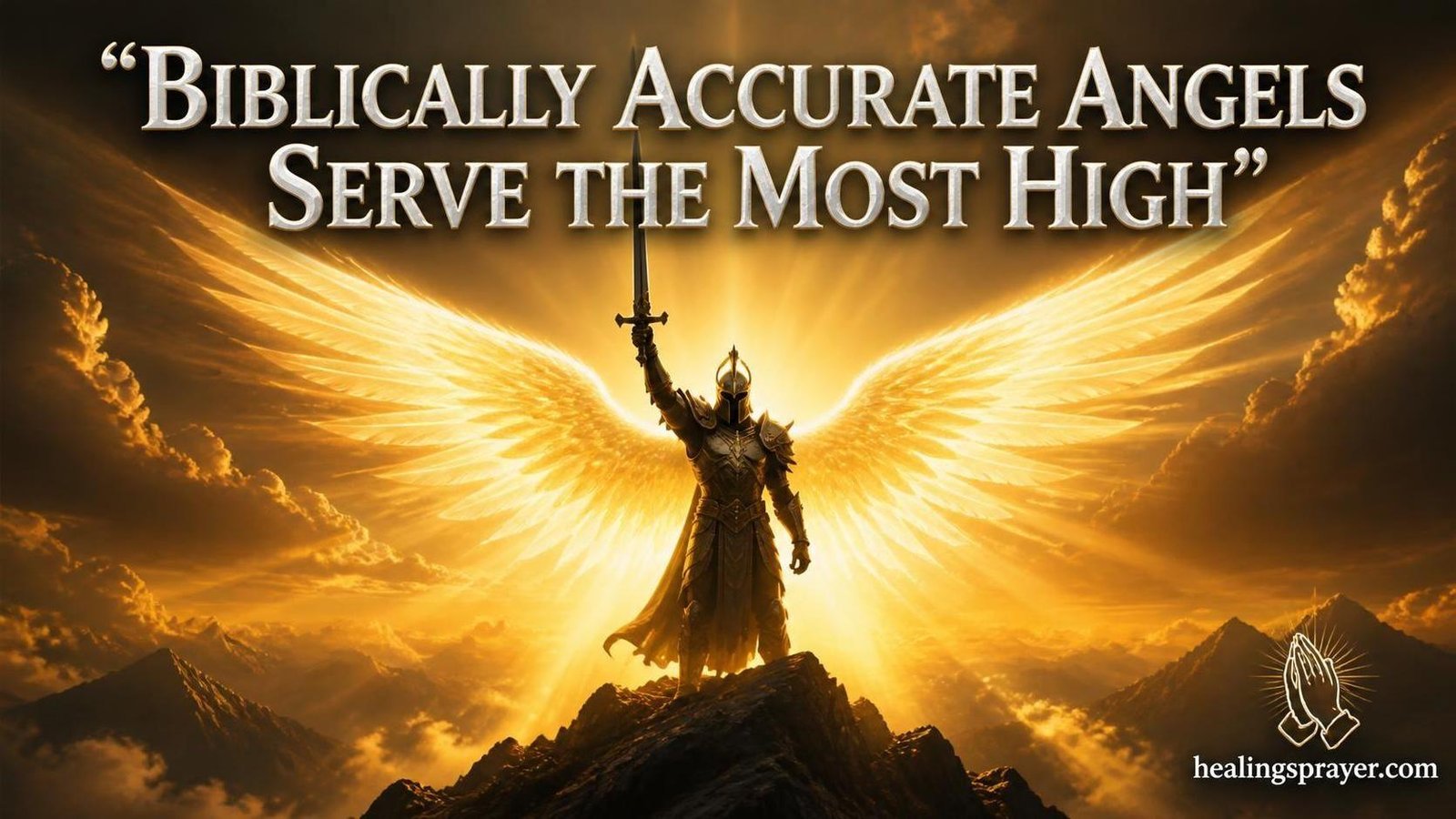
The word archangel means “chief angel.” It appears only twice in the New Testament: in 1 Thessalonians 4:16, where the Lord descends with the voice of an archangel, and in Jude 9, where Michael is called the archangel.
When you study archangels among biblically accurate angels, the key skill is separating three layers: what the Bible names, what other ancient books name, and what later tradition adds.
Michael
Michael is named in Daniel 10:13 and 10:21, where he is called one of the chief princes and the prince of Israel. Daniel 12:1 says he will arise during a time of great distress.
Jude 9 says Michael did not dare to bring a slanderous accusation against the devil, but said, “The Lord rebuke you.” Revelation 12:7 shows Michael and his angels fighting the dragon. Michael is the warrior archangel of scripture, and the clearest named leader among biblically accurate angels.
Gabriel
Gabriel appears in Daniel 8:16 and 9:21, explaining visions to Daniel. In Luke 1:19 he tells Zechariah, “I am Gabriel, who stands in the presence of God,” and in Luke 1:26-38 he announces the birth of Jesus to Mary. Scripture calls Gabriel an angel, not an archangel, but tradition counts him as one, and he is the best-known named messenger among biblically accurate angels.
Raphael: A Question of Canon
Raphael appears in the book of Tobit, which is part of the Catholic and Orthodox Bibles but is not in the Protestant canon. In Tobit 12:15, Raphael says he is one of seven angels who stand ready before the glory of the Lord.
So Michael and Gabriel are named in all Christian Bibles, while Raphael is named only in some. Names such as Uriel come from other Jewish writings like 1 Enoch and are not scripture in most traditions.
What the Bible Does Not Tell Us
The Bible does not give a numbered list of seven archangels. It does not say how archangels rank among seraphim, cherubim and thrones. Those ranking systems come from later writers, especially Pseudo-Dionysius, and were developed by medieval theologians.
The text instead shows archangels as leaders and messengers who appear in specific moments: a battle, a vision, a birth announcement. That is the scriptural picture of biblically accurate angels in leadership roles. The bible description of angels gives names to only a few of them.
Biblically Accurate Angels in Revelation
The book of Revelation contains more angel scenes than any other book of the Bible. For readers who want biblically accurate angels in action, Revelation is where the text is most active. It is also symbolic writing, so the details need careful reading.
Angels in Great Numbers
Revelation 5:11 describes myriads of myriads and thousands of thousands of angels around the throne, singing worship to the Lamb. The scene is a crowd too large to count, and it is full of biblically accurate angels in worship.
The Seven Trumpets and the Seven Bowls
Revelation 8:2 shows seven angels standing before God who are given seven trumpets. Later, seven angels carry the seven bowls of God’s wrath (Revelation 15:1, 6-7). These angels carry out judgments in the vision.
The Mighty Angel of Revelation 10
Revelation 10:1 describes a mighty angel coming down from heaven, wrapped in a cloud, with a rainbow over his head. His face is like the sun and his legs are like pillars of fire.
This is one of the most vivid descriptions of a single angel outside Ezekiel and Daniel. It shows that messenger angels can appear in overwhelming glory, which is why Revelation matters for biblically accurate angels.
Michael and the Dragon
Revelation 12:7-9 describes war in heaven. Michael and his angels fight the dragon, who is identified as the ancient serpent, the devil and Satan. The dragon is thrown down to earth with his angels. This is the clearest war scene involving biblically accurate angels in the New Testament.
Angels That Fly, Guard and Announce
Revelation 14:6 shows an angel flying in midheaven with an eternal gospel to proclaim to every nation. Revelation 20:1 describes an angel with the key of the abyss and a great chain. Revelation 21:12 says angels stand at the twelve gates of the New Jerusalem.
What These Scenes Show About Biblically Accurate Angels
Taken together, these passages show biblically accurate angels who worship, announce, guard and carry out God’s plans. They are never independent rulers. Each one acts on a command.
John Falls to Worship
Twice, in Revelation 19:10 and 22:8-9, John falls at the feet of an angel to worship, and twice the angel refuses. The angel calls himself a fellow servant and tells John to worship God.
This is one of the clearest teachings about angels in the whole Bible. Even the most glorious of the biblically accurate angels never takes the place of God. A reading of Revelation that makes an angel biblically accurate must include this refusal to be worshiped.
Why Do Angels Say “Do Not Be Afraid”?
The most repeated line spoken by angels in the Bible is some form of “do not be afraid.” The need for that line tells you how frightening angel encounters can be, and it is one of the most overlooked facts about biblically accurate angels.
Fear Is the Normal Reaction
Daniel 10:7-9 says the men with Daniel fled in terror, and Daniel was left with no strength and fell on his face. In Judges 13:22, Manoah says, “We shall surely die, for we have seen God.”
Matthew 28:4 says the guards trembled and became like dead men after seeing the angel at the tomb. Luke 2:9 says the shepherds were “sore afraid” (KJV) when the glory of the Lord shone around them. Fear is the standard response to biblically accurate angels in scripture.
The Phrase Appears Again and Again
Angels say “do not be afraid” to Zechariah (Luke 1:13), to Mary (Luke 1:30), to Joseph (Matthew 1:20) and to the shepherds (Luke 2:10). The phrase is not a formality. It answers real fear, and it shows how often biblically accurate angels had to calm the people they visited.
Why Angels Cause Fear
There are three reasons the text supports.
First, holiness. Angels stand in the presence of God, and meeting someone sent from that presence exposes human weakness. Isaiah’s “Woe is me” in Isaiah 6:5 is the pattern.
Second, power. Angels in scripture can strike down armies (2 Kings 19:35) and shut the mouths of lions (Daniel 6:22). The visitor is stronger than the one visited.
Third, mystery. A being with wings, wheels or flaming eyes belongs to an order of creation that humans cannot easily understand. The more accurate the picture of biblically accurate angels, the more reasonable that fear appears.
What the Fear Teaches
After naming the fear, the angel almost always gives good news: a birth, a rescue, a promise. The fear comes from the angel’s glory, and the comfort comes from the angel’s message. That pattern holds for biblically accurate angels across the whole Bible.
Also Read : may today hand you one small reason to feel grateful before it even asks anything of you.
Are Guardian Angels in the Bible?
The Bible supports the idea of guardian angels, but it does not give a complete doctrine of them. What it gives is a set of clear verses about angelic protection, and these verses sit comfortably beside the other descriptions of biblically accurate angels.
Psalm 91:11-12
Psalm 91:11-12 says God will command his angels concerning you to guard you in all your ways, and that they will lift you up in their hands. The language is about protection that comes from God’s command.
Matthew 18:10
Jesus says that the angels of the little ones always see the face of his Father in heaven. Many readers take this to mean that children, and possibly all believers, have angels assigned to them. Others read it more generally as a statement of God’s care.
Hebrews 1:14 and Acts 12:15
Hebrews 1:14 calls angels ministering spirits sent to serve those who will inherit salvation. In Acts 12:15, the believers say “It is his angel” when Peter appears at the door, which suggests that some early Christians believed in a personal angel. Both verses treat angels as real helpers, which fits what the Bible says about biblically accurate angels as servants.
National and Local Angels
Daniel 10:13 speaks of the “prince of the kingdom of Persia” and of Michael, one of the chief princes. This suggests angels have roles that extend to nations and regions.
Where Traditions Differ
The Catechism of the Catholic Church (paragraph 336) teaches that beside each believer stands an angel as protector and shepherd. Many Protestant traditions affirm angelic protection while being more cautious about the idea of one assigned angel for each person.
The Bible’s firm point is that God uses angels to protect his people. Protection always comes from God, and the angels are his servants. Whatever view you hold, protection stays part of the work of biblically accurate angels.
Fallen Angels and Satan in the Bible
The Bible speaks of angels who rebelled, but it gives fewer details than later tradition and popular stories do. A balanced reading sticks to the verses, and it keeps fallen angels separate from biblically accurate angels who serve God.
What Scripture Says
2 Peter 2:4 says God did not spare the angels when they sinned, but cast them into hell and committed them to chains of darkness. Jude 6 describes angels who did not keep their position and are held in eternal chains for judgment.
Revelation 12:7-9 shows the dragon, called the devil and Satan, thrown down with his angels. In Luke 10:18, Jesus says, “I saw Satan fall like lightning from heaven.”
The Meaning of “Satan”
In Hebrew, ha-satan means “the accuser” or “the adversary.” In Job 1:6, he appears among the sons of God as an accuser, acting under God’s limits. In the New Testament, the same figure is called the devil, the tempter and the evil one.
Isaiah 14 and Ezekiel 28
Many Christians have traditionally read Isaiah 14:12-15 and Ezekiel 28:12-17 as describing Satan’s fall. In context, these passages address the king of Babylon and the king of Tyre, so scholars disagree about whether they also point beyond those kings. The name “Lucifer” comes from the Latin translation of Isaiah 14:12, where it means “morning star.”
A Warning Worth Noting
2 Corinthians 11:14 says Satan disguises himself as an angel of light. This is a reason to test any spiritual claim against scripture, and a reason to treat the biblical description of angels as the standard. Knowing the real descriptions of biblically accurate angels makes imitations easier to spot.
Why Did “Biblically Accurate Angels” Become So Popular Online?
The phrase biblically accurate angels went from a niche religious term to a widely shared online trend during the 2010s. The popularity comes from a collision between what people expect and what the Bible says.
The Meme Format
The typical meme places a soft, winged figure next to a strange image of wheels, eyes or a many-faced creature, with a caption saying that the second image is the biblically accurate angel. The humor depends on contrast.
The trend spread through social media, image boards, video games, anime and horror-style art. Many creators use the Ezekiel and Revelation descriptions as inspiration for creature design. Search terms like “biblical accurate angels” are common on Pinterest and image boards.
Why Biblically Accurate Angels Fit Online Culture
Several things explain the lasting interest in biblically accurate angels:
- The real descriptions are visually dramatic, and they suit art and digital design.
- The contrast with the popular picture is surprising.
- Many people have never read Ezekiel 1 or Isaiah 6.
- The images are shareable, which is why Pinterest and similar platforms carry them.
Meme Versus Scripture
Memes often combine details from different passages into one monster: wheels with faces, wings, eyes and flames. Some of these images are creative, but they are not accurate angel depiction in the strict sense, because they mix separate descriptions into one invented figure.
The better use of the trend is as an invitation. If a meme makes you curious, open the passage it came from and read it.
Art History Matters Too
The soft angel look is also a product of history. Early Christian art often showed angels without wings. Winged angels became common by the fourth century, partly influenced by Roman winged figures such as Victory. Halos were adopted from earlier artistic symbols of divinity and honor.
Medieval and Renaissance artists then added robes, gentle faces and baby-like cherubs. None of that is wrong as art, but it is not the same as the text. It also explains why biblically accurate angels look so different from the angels in older paintings.
Biblically Accurate Angels Comparison Table
This table summarizes the main types of biblically accurate angels in one place. Each row lists the appearance, the key verses, the role and a one-line takeaway you can save or share. Where a detail comes from tradition instead of scripture, the sections above note it.
| Angel Type | Appearance | Key Bible Verses | Role | Quick Takeaway |
|---|---|---|---|---|
| Seraphim | Fiery beings with six wings; faces and feet covered | Isaiah 6:1-7 | Worship at God’s throne; cleanse Isaiah’s lips with a coal | “Seraphim are the burning ones who never stop saying ‘holy.'” |
| Cherubim | Winged guardians; four faces in Ezekiel | Genesis 3:24; Exodus 25:18-22; Ezekiel 10 | Guard holy places; carry God’s throne | “Cherubim are mighty guardians, not babies.” |
| Ophanim (Thrones) | Wheels within wheels, gleaming like beryl, rims full of eyes | Ezekiel 1:15-21; 10:9-13; Daniel 7:9 | Move with the living creatures and God’s throne | “Ophanim are wheels full of eyes: nothing escapes God’s sight.” |
| Living Creatures | Four faces, four wings, bronze-like legs, fire among them | Ezekiel 1:5-14; Revelation 4:6-8 | Worship and attend God’s throne | “The living creatures show that heaven never stops praising.” |
| Archangels | Often seen as men or warriors; Michael leads heavenly armies | Daniel 10:13; 12:1; Luke 1:19; Jude 9 | Lead, fight and deliver major messages | “Archangels stand where heaven meets history.” |
| Messenger Angels | Often look like ordinary men, sometimes shining | Genesis 18-19; Luke 1:26-38; Hebrews 13:2 | Deliver messages, protect, serve | “The angel at your door may look completely ordinary.” |
| Angels in Revelation | Mighty, cloud-robed, flying, trumpet-bearing | Revelation 5:11; 8:2; 10:1; 12:7; 14:6 | Announce judgment, fight, worship | “In Revelation, angels carry both warning and worship.” |
Common Mistakes People Make About Biblically Accurate Angels
Even careful readers pick up myths about biblically accurate angels. These are the most common errors, with the corrections.
Mixing up tradition and scripture. The nine choirs of angels, the seven named archangels and the exact ranking of Thrones and Dominions come from later writers. The Bible names Michael and Gabriel, and it names the types of beings in a few passages.
Treating memes as scripture. A meme about biblically accurate angels may mix a wheel from Ezekiel with a face from another passage and add details that are not in either. Check the verse before sharing the image.
Confusing cherubim with cupids. Cherubim in the Bible are guardians of Eden, the ark and the temple. The baby-like putti and Cupid figures belong to Renaissance and classical art.
Assuming all angels look alike. The Bible describes many kinds of heavenly beings. A messenger angel in Genesis 18 looks nothing like a seraph in Isaiah 6, and neither looks like a wheel in Ezekiel 1. Biblically accurate angels differ by type and by passage.
Assuming every angel has wings. Wings are named for seraphim, cherubim and living creatures. Angels in human form are not described with wings.
Claiming a single “correct” look. Anyone who searches for biblically correct angels will find several different descriptions. A responsible reading allows for variety, because scripture itself does. A strict bible description of angels keeps tradition in its place.
Calling every strange creature in the Bible an angel. Not every beast or vision in scripture is an angel. Check whether the text itself calls the being an angel, a seraph, a cherub or a living creature before using it as a description of biblically accurate angels.
Forgetting the purpose. Angels point to God. In Revelation 19:10 and 22:9, the angel tells John not to worship him. Treating angels as the main subject misses the Bible’s main subject.
A good accurate angel depiction keeps the sources separate, names the verse, and leaves room for mystery where the text is silent. Readers who follow that rule will understand biblically accurate angels better than any meme can explain.
What Biblically Accurate Angels Teach Us About God and How to Apply It in Daily Life
Studying biblically accurate angels is not only about strange appearances. These passages show something about the God they serve, and they offer practical comfort.
What Biblically Accurate Angels Show About God
God is holy. The seraphim cover their faces in his presence. Awe is the right response to holiness, and the biblically accurate angels of Isaiah 6 model that response.
God sees everything. The eyes on the wheels in Ezekiel point to a God whose knowledge is complete. You cannot be overlooked.
God is not limited by place. The wheels move in every direction. In Ezekiel, the glory of God is with exiles by a river in Babylon, far from the temple.
God cares for his people. Psalm 91:11 and Hebrews 1:14 show angels sent to help. Protection is part of how God relates to his people.
Reflection Points
- Which part of the biblically accurate angels descriptions made you stop and think?
- Where in your life do you need to remember that God sees you fully?
- What fear are you carrying that “do not be afraid” could speak to?
- Where could you practice reverence more deliberately?
A Short Prayer-Style Reflection
Lord, you are holy, and the angels worship you without ceasing. Teach me to approach you with awe and with trust. When I feel afraid, remind me that you are near. Guard my steps, guide my choices and help me serve you with a humble heart. Amen.
Simple Daily Practices
- Begin with worship. Before you ask for anything, spend one minute praising God, the way the seraphim do in Isaiah 6.
- Read one passage a week. Choose Isaiah 6, Ezekiel 1, Daniel 10 or Revelation 4, and read it slowly. Each one shows biblically accurate angels in their own setting.
- Practice hospitality. Hebrews 13:2 links kindness to strangers with the possibility of entertaining angels.
- Pray Psalm 91. Read it aloud when you feel anxious or unsafe.
- Build a steady prayer habit. A resource like can help you keep a consistent rhythm.
The most important takeaway is that angels are not the center. They point to God, and the comfort that biblically accurate angels bring comes from the one who sent them.
Frequently Asked Questions
Do angels have wings in the Bible?
Some angels have wings in the Bible, but not all. Seraphim have six wings (Isaiah 6:2), cherubim and the living creatures have wings (Ezekiel 10:19; Revelation 4:8), and Revelation 14:6 shows an angel flying. Angels who appear as men, such as the visitors in Genesis 18 and 19, are not described with wings. Wings belong to specific types, which is a key point about biblically accurate angels.
Are angels scary in the Bible?
Many angel encounters in the Bible are frightening. People fall down, tremble or fear for their lives in Judges 13:22, Daniel 10:7-9, Matthew 28:4 and Luke 2:9. The angel’s first words are often “do not be afraid.” The fear comes from meeting a holy, powerful being sent from God. Not every encounter is terrifying, though, since some visitors in Genesis 18 are not recognized at first. Both reactions are normal for biblically accurate angels.
What do ophanim look like?
The ophanim look like wheels within wheels, gleaming like beryl, with tall rims covered in eyes. Ezekiel 1:15-21 says they move in any direction without turning and travel with the living creatures because the spirit of the creatures is in them. The Bible does not describe faces on the wheels. Tradition later links the ophanim with the thrones, and they are among the most striking biblically accurate angels.
Are cherubim babies?
No, cherubim are not babies in the Bible. They are powerful winged guardians placed at Eden (Genesis 3:24), shaped on the ark’s mercy seat (Exodus 25:18-22) and seen in Ezekiel’s vision with four faces (Ezekiel 10). The chubby child image comes from Renaissance art, where decorative figures called putti became mixed up with the word cherub. Among biblically accurate angels, cherubim are guardians, not infants.
How many angels are named in the Bible?
Two angels are named in the Protestant Bible: Michael and Gabriel. Michael appears in Daniel 10:13 and Jude 9, and Gabriel in Daniel 8:16 and Luke 1:19. Catholic and Orthodox Bibles add Raphael, who appears in the book of Tobit. Other names, such as Uriel, come from writings like 1 Enoch that most Christian traditions do not treat as scripture. So the named biblically accurate angels are few, and most angels in scripture are unnamed.
Is a guardian angel in the Bible?
The Bible supports guardian angels but does not give a full doctrine of them. Psalm 91:11 says God will command his angels to guard you, Hebrews 1:14 calls angels ministering spirits for believers, and Matthew 18:10 says the angels of children always see the Father’s face. Christian traditions differ on whether each person has one assigned angel, though all agree that God protects his people. Protection is part of the work of biblically accurate angels.
What is the difference between seraphim and cherubim?
Seraphim are fiery, six-winged worshipers, while cherubim are winged guardians with four faces. Seraphim are named only in Isaiah 6, where they praise God and cleanse Isaiah’s lips. Cherubim appear throughout the Old Testament guarding Eden, the ark and the temple, and carrying God’s throne in Ezekiel. Both groups belong among the biblically accurate angels of scripture, with different jobs.
What are biblically correct angels?
Biblically correct angels are heavenly beings described the way scripture itself describes them, not the way later art or memes show them. They include seraphim, cherubim, ophanim, living creatures, archangels and messenger angels. These descriptions come from passages like Isaiah 6, Ezekiel 1 and Revelation 4. Biblically accurate angels are often awe-inspiring, and sometimes they look entirely ordinary. Searchers who type biblical accurate angels are asking the same question.
Do angels have halos in the Bible?
No verse in the Bible describes angels with halos. The halo is an artistic symbol that Christian artists adopted from earlier Roman imagery to mark holiness. In scripture, the light around heavenly beings is described as lightning, fire, brightness or glory, as in Matthew 28:3 and Revelation 10:1. Halos belong to art history, not to the text about biblically accurate angels.
Conclusion
IMAGE PROMPT 6 (Peace and protection, right after this H2): Create a 16:9 widescreen image for an article, sharp and readable on mobile and all devices. A calm dawn sky with soft golden rays breaking through gentle clouds above a quiet valley, with faint translucent wings of light stretching across the horizon like a protective canopy, in a peaceful, cinematic scene with no realistic human face. Across the center, write the quote “Biblically Accurate Angels Whisper: Do Not Be Afraid” in a graceful flowing calligraphy style Great Vibes font in soft white and gold, large and clear. In the bottom-right corner, write “healingsprayer.com” in small, clean white text, with small professional hands in dua above it. ALT TEXT: Peace and protection from biblically accurate angels at dawn FILE NAME: biblically-accurate-angels-peace-and-protection.jpg
The picture of biblically accurate angels is bolder, stranger and more meaningful than the soft figures of popular art. The Bible gives us seraphim who burn with holiness, cherubim who guard sacred places, ophanim who are wheels full of eyes, living creatures who never stop worshiping, and archangels who carry out God’s purposes.
It also shows messenger angels who look like ordinary people, which is a good reminder to stay kind and attentive. Biblically accurate angels can be dazzling or plain.
When you meet these descriptions with an open mind, the fear that angels so often cause turns into something better: reverence, trust and peace. The message of biblically accurate angels to the people they visit is almost always the same: “do not be afraid.”
Keep reading the original passages. Compare every image you see with the verse it claims to come from. That habit is the best test of any claim about biblically accurate angels. And remember that the point of every angel in scripture is to point you toward God.
May the study of biblically accurate angels leave you with deeper awe, steadier faith and a quiet sense of being cared for.

Welcome to Healings Prayer!
Healings Prayer is a faith-based platform created to offer comfort, hope, and encouragement through prayer and Scripture. Our mission is to help people find peace in difficult moments and draw closer to God through heartfelt prayers and Bible verses.